
 Available in US
Content
- What In-Play Markets Are Available for Rugby
- Five Momentum Triggers That Shift Live Odds
- When to Strike: Timing Windows in 80 Minutes of Rugby
- Weather, Altitude and Surface: Environmental Live Triggers
- Cash Out Decisions During a Rugby Match
- Staying Disciplined: In-Play Betting Without Chasing
- In-Play Rugby Betting: Your Questions
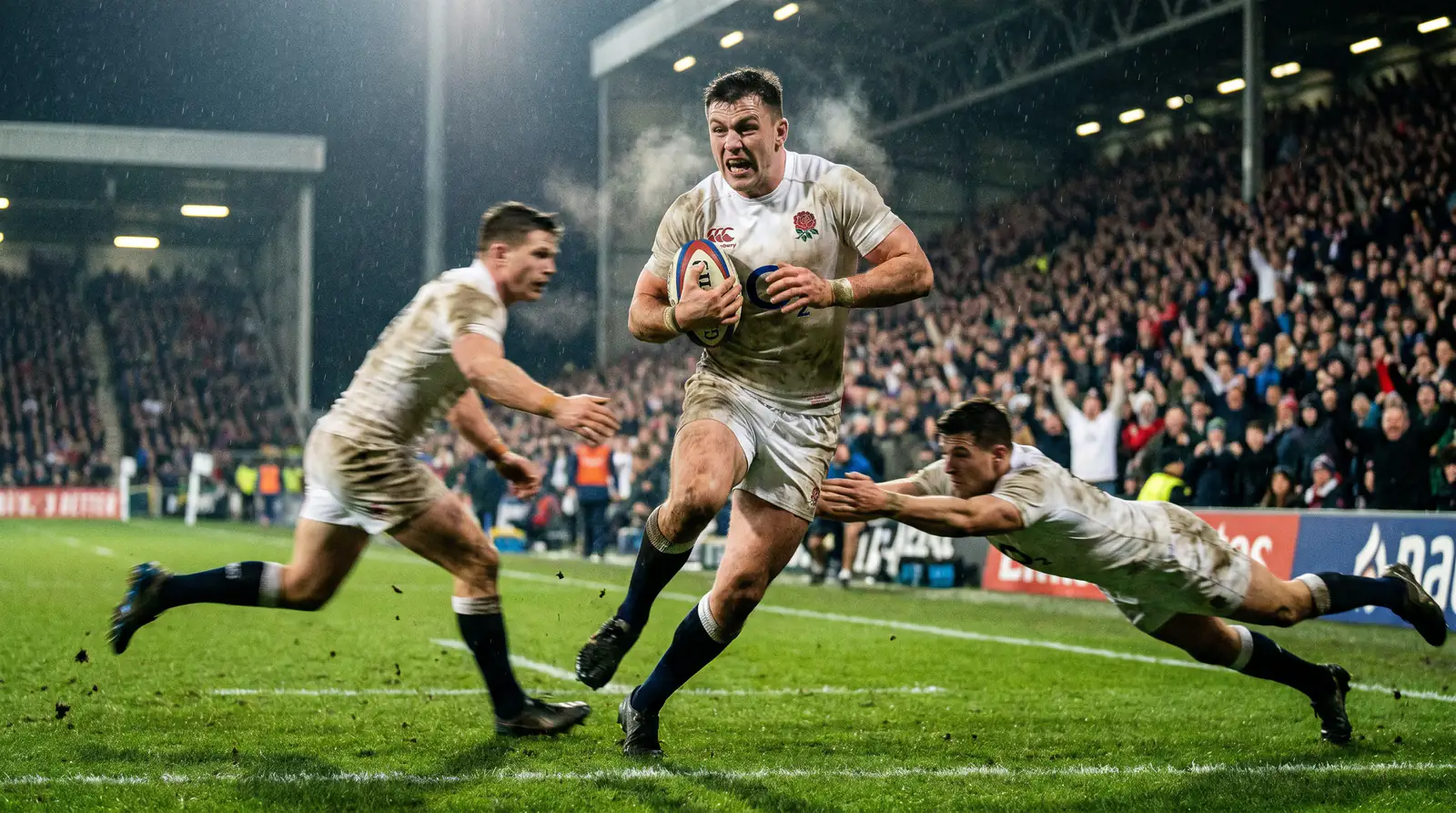
Seventy-three minutes into a Premiership match last November, I watched a fly-half miss a routine penalty that would have extended his team’s lead to 11 points. Within 90 seconds, the live match result odds shifted by 15%. Within four minutes, the trailing team scored a converted try to close the gap to four. I had placed my in-play bet in the window between the missed kick and the try, backing the trailing side at a price that reflected the old scoreline, not the new momentum. That is in-play rugby betting at its sharpest: reading the match in real time and acting before the market catches up.
The growth of mobile betting has transformed in-play rugby from a niche activity into the dominant format for younger punters. Seventy-six percent of UK bettors aged 18-24 place their wagers through mobile devices, and the immediacy of phone-based betting maps perfectly onto the rhythms of a rugby match. A sin bin, a scrum penalty, a substitution wave — each creates a micro-window where the live odds have not yet adjusted to the new match state. Those windows are where I make the majority of my in-play profit.
This guide is built around the concept of triggers and timing. I will identify the five momentum shifts that create the biggest live odds movements, map the timing windows within an 80-minute match where value concentrates, and give you a framework for cash-out decisions that does not rely on gut feeling. In-play betting rewards speed, but it rewards preparation more.
What In-Play Markets Are Available for Rugby
Before you can exploit live markets, you need to know what is on the table. I was surprised, when I first moved from pre-match to in-play betting, by how much narrower the live offering was compared to the fixture card available 24 hours before kick-off. The live market menu is smaller but faster, and the key is understanding which markets remain open throughout the match and which shut down at specific phases.
The live match result market — next score, match winner — stays open for virtually the entire 80 minutes, suspending only during active play near the try line or during TMO reviews. This is the most liquid in-play market and the one where odds adjust fastest. I use it primarily as a hedge tool, not as my primary in-play bet, because the margin on the match result market is tightest and therefore hardest to beat.

Live handicap and totals markets are where the real in-play value sits. These markets adjust more slowly than match result after momentum shifts, because the bookmaker’s algorithm needs to recalculate projected final scores rather than simply adjusting win probabilities. The delay between a sin bin being announced and the live handicap line fully adjusting can be 60-90 seconds — an eternity in live betting terms. I place the majority of my in-play stakes on handicap and totals within that adjustment window.
Next scoring method — try, penalty, drop goal — is a market unique to rugby’s live offering, and one that rewards tactical reading. If a team is camped on the opposition’s five-metre line and the referee has warned the defending team about repeated infringements, the probability of the next score being a penalty try or a penalty goal spikes dramatically. This market prices those scenarios imperfectly because it relies on generic scoring-method distributions rather than real-time match context.
Next try scorer and anytime try scorer markets remain available in-play but become thinner as the match progresses. I only bet these markets in-play when a substitution changes the attacking dynamic — a fresh winger replacing a tired one, or an impact number eight coming off the bench in the final 20 minutes. The substitution itself is the trigger; the try scorer market is the vehicle.
Five Momentum Triggers That Shift Live Odds
Not all match events are created equal. Some shift the odds by a fraction of a percent; others rearrange the entire in-play market in seconds. After years of watching live odds feeds alongside match footage, I have narrowed the list to five triggers that consistently create the largest and most exploitable price movements.
Trigger 1: The sin bin. A yellow card removes a player for 10 minutes, and the impact on live odds is immediate and significant. But here is what most bettors miss: the size of the odds shift depends heavily on which player is carded and when. A prop sent to the bin in the 25th minute disrupts the scrum for two resets at most. A flanker carded in the 65th minute leaves a gap in the defensive line during the highest-scoring phase of the match. I weight my in-play response to sin bins by position and timing, not just by the card itself.

Trigger 2: The scrum collapse sequence. When scrums start collapsing repeatedly, referees escalate penalties — free kick, then penalty, then potential yellow card. This sequence takes three to five minutes to unfold and creates a cascading odds shift. The initial free kick barely moves the market; the penalty shifts it moderately; the yellow card threat is where the big move happens. I enter my in-play bet after the second scrum penalty, anticipating the card that follows. The market has not priced the card yet, but the on-field pattern makes it highly probable.
Trigger 3: The half-time score in tight matches. Around 33% of Premiership matches finish with a winning margin of one to seven points, and many of those tight results are visible at half-time. When the score is within a converted try at the break, the in-play odds reset for the second half in a way that often overstates the leading team’s advantage. I look for matches where the half-time leader is ahead by three to six points and the trailing team has strong bench options. The second-half market frequently underprices the comeback.
Trigger 4: The injury replacement at a key position. A starting fly-half going off with a knee injury changes the match fundamentally. The replacement may be technically competent but lack the starting player’s game management, kicking accuracy or understanding of the team’s attacking structure. Live odds adjust for the loss of any player, but they underadjust for the loss of a fly-half or scrum-half — the two positions where individual quality has the most disproportionate impact on team performance.
Trigger 5: The front-row substitution wave. In modern rugby, most teams replace their entire front row between the 50th and 60th minute. This substitution wave changes the scrum dynamic, the breakdown contest and the defensive line speed simultaneously. If the team making the change has a significantly stronger bench pack — what coaches call the “bomb squad” — the next 20 minutes will look different from the first 50. I track bench composition before kick-off specifically to anticipate this trigger. When a team with a strong replacement front row is trailing at the 50-minute mark, the live odds rarely reflect the incoming boost adequately.
When to Strike: Timing Windows in 80 Minutes of Rugby
I divide a rugby match into four betting phases, and each has a different risk-reward profile. Understanding these phases is the difference between disciplined in-play betting and reactive gambling.
Phase 1: Minutes 1-20. Both teams are feeling each other out. Scoring tends to be lower in this phase than in any other, and the pre-match odds are still broadly accurate. I rarely place in-play bets in the first 20 minutes unless one of my five triggers fires. The exception is a penalty-heavy opening quarter in wet conditions, which signals a low-scoring match and creates early value on the under.

Phase 2: Minutes 20-40. This is the phase where the match character reveals itself. By the 25th minute, you can see which team controls territory, which scrum is dominant and whether the referee is allowing the breakdown contest or clamping down. I make my primary in-play assessment at the 25-minute mark and place my largest in-play bet of the match — typically on the live handicap or second-half totals — based on the patterns I have observed. The Super League’s 52% increase in television audiences reflects a sport that is becoming more watchable and more frequently bet on, and this middle phase is where the viewing-betting nexus is strongest: engaged viewers spot patterns and act on them.
Phase 3: Minutes 40-60. The second half opens with the highest try-scoring rate in the match. Teams come out with adjusted tactics, fresh legs from half-time rest, and urgency — particularly if they are trailing. I use this phase for try scorer bets and next scoring method. The half-time tactical adjustment creates information that was not available before the break, and the in-play odds are still calibrated to first-half patterns.
Phase 4: Minutes 60-80. The chaos phase. Fatigue, substitutions, tactical desperation and bonus-point chasing converge. This is the phase where the most tries are scored and the most dramatic odds movements occur. It is also the phase where undisciplined bettors lose the most money, because the temptation to chase earlier losses is strongest when the clock is running down. I have a firm rule: I do not place a new in-play bet after the 70th minute unless I identified the opportunity before the match started. If I did not anticipate the late-game scenario in my pre-match preparation, I stay out.
Weather, Altitude and Surface: Environmental Live Triggers
I once watched a Six Nations match at Murrayfield where the first half was played in bright sunshine and the second half in horizontal sleet. The half-time total was 24 points. The second-half total was 6. The live over/under line at half-time did not adjust for the incoming weather front nearly enough, and the under was a gift. Environmental conditions are the most underpriced factor in live rugby betting, because most punters and most algorithms treat weather as a static pre-match input rather than a dynamic in-play variable.

Rain arriving mid-match compresses scoring immediately. Handling errors increase, lineout throws become less accurate, and the kicking game dominates. In Union, this shifts scoring from tries toward penalties, which reduces total points. In League, the effect is even more pronounced because the sport’s reliance on quick ball movement and offloading is disrupted more severely by a wet surface. When I see rain starting during a match, I check the live totals line before placing anything else. A mid-match weather change is the single most reliable environmental trigger I have found.
Wind direction changes are subtler but equally valuable. At exposed grounds — Murrayfield, Thomond Park, several of the South African venues during Lions tours — wind affects kicking accuracy, restart quality and territorial control. A team kicking with the wind in the first half may have dominated territory without scoring proportionately. When they turn around for the second half, their territorial advantage evaporates, and the live odds often have not adjusted for the reversal. I track wind direction at kick-off and factor the half-time switch into my second-half betting.
Pitch surface deterioration is the environmental trigger that takes longest to manifest but produces the most reliable outcome shift. By the 60th minute on a heavy pitch, ball movement slows, rucking becomes more physical, and the game compresses into forward-dominated set pieces. This is an under trigger: the last 20 minutes on a deteriorating surface produce fewer points than any other phase. For a comprehensive breakdown of weather factors across different venues, I have put together a dedicated guide to weather’s impact on rugby betting that covers forecasting routines and historical patterns.
Cash Out Decisions During a Rugby Match
Cash out is the feature I have the most complicated relationship with. Used well, it is a risk management tool that locks in profit or limits losses at the right moment. Used badly, it is a profit-destruction machine that hands value back to the bookmaker at precisely the wrong time.
The first thing to understand about cash out is that the offered price always includes a margin for the bookmaker. When you cash out, you are accepting a price that is worse than the theoretical fair value of your position. Tim Miller, the Gambling Commission’s Executive Director, has spoken about the Commission’s desire to encourage operators to innovate in ways that serve consumers within a well-regulated market. Cash out is one such innovation — but the bettor needs to understand that the convenience comes at a cost, typically 3-5% of the position’s fair value.

I use cash out in exactly three scenarios. First, when my pre-match analysis has been proven wrong by in-match developments. If I backed a team at -7.5 because I expected their scrum to dominate, and the first three scrums have gone against them, the thesis is broken. Cashing out for a partial loss is better than riding a dead position to full settlement. Second, when an unexpected event — a red card, a serious injury to a key player — fundamentally changes the match in a way my pre-match model did not account for. Third, when I have a profitable position and the match enters the chaos phase after 70 minutes with my bet still alive. Locking in 75% of the maximum profit is a rational choice when the remaining 25% requires surviving 10 minutes of unpredictable, fatigue-driven rugby.
I never cash out because I am nervous. Nervousness is an emotional state, not an analytical one. If the match is unfolding as my pre-match analysis predicted, I hold the position regardless of how the scoreline feels. The bet was made on logic; it should be settled on logic.
Staying Disciplined: In-Play Betting Without Chasing
I need to say something uncomfortable. In-play betting is the format most associated with problem gambling behaviour, and anyone who writes about it has a responsibility to acknowledge that directly. The UK Gambling Commission’s most recent data shows that 2.7% of British adults — around 1.4 million people — score at problem-gambling levels. In-play betting’s speed, immediacy and emotional intensity make it a higher-risk format than pre-match wagering, and the discipline framework I use is designed to mitigate that risk as much as to improve profitability.

My in-play rules are non-negotiable. I set a maximum number of in-play bets per match before kick-off — typically two — and I do not exceed that number regardless of what happens during the game. If both bets lose, I am done for that fixture. No third bet, no “just one more.” The urge to chase a loss is strongest in the final 10 minutes of a match, when the odds are shifting rapidly and the emotional pull is at its peak. That is exactly when discipline matters most.
I also set a daily in-play loss limit that is separate from my overall bankroll. If I reach that limit across multiple fixtures on a Saturday, I close the app and do something else. The matches will still be there next weekend. The bankroll might not be if I continue betting in an emotional state.
Preparation is the best antidote to impulsive in-play betting. When I have done my homework — identified the triggers, mapped the timing windows, set my entry points in advance — I am executing a plan, not reacting to the match. The bets I regret are never the ones I planned; they are always the ones I improvised at the 75th minute because the odds “looked good.” If you take one thing from this guide, let it be this: plan your in-play bets before the whistle, and stick to the plan.
In-Play Rugby Betting: Your Questions
How quickly do rugby in-play odds change after a try is scored?
The match result odds adjust within 5-10 seconds of the try being confirmed, but handicap and totals markets take longer — typically 30-90 seconds — because the algorithm recalculates projected final scores rather than simply adjusting win probabilities. That delay between the try confirmation and the full handicap adjustment is where in-play value concentrates.
Is second-half betting more profitable than first-half betting in rugby?
Second-half rugby produces more tries and more points than the first half across both Union and League. The try-scoring rate increases after the 50th minute due to fatigue, substitutions and tactical urgency. For totals, the second half is where overs hit more frequently. For handicap betting, the second half favours underdogs slightly because fatigue compresses margins.
What live stats should I monitor during a rugby match?
Territory percentage, tackle completion rate and penalty count are the three most useful live stats for in-play betting. A team dominating territory above 60% will eventually convert that pressure into points. A declining tackle completion rate — dropping below 85% — signals defensive fatigue and upcoming scoring opportunities for the opposition. Penalty count tracks referee tendencies and yellow card risk.
Can I use cash out and still place a new in-play bet on the same match?
Yes, cashing out settles your existing position, freeing you to place a new bet on the same match at the current live odds. This is a legitimate strategy when the match dynamic has shifted and your original bet no longer reflects the game state. However, each cash-out-and-replace cycle costs you the bookmaker’s margin, so it should be used sparingly and only when the match has genuinely changed character.
