
 Available in US
Content
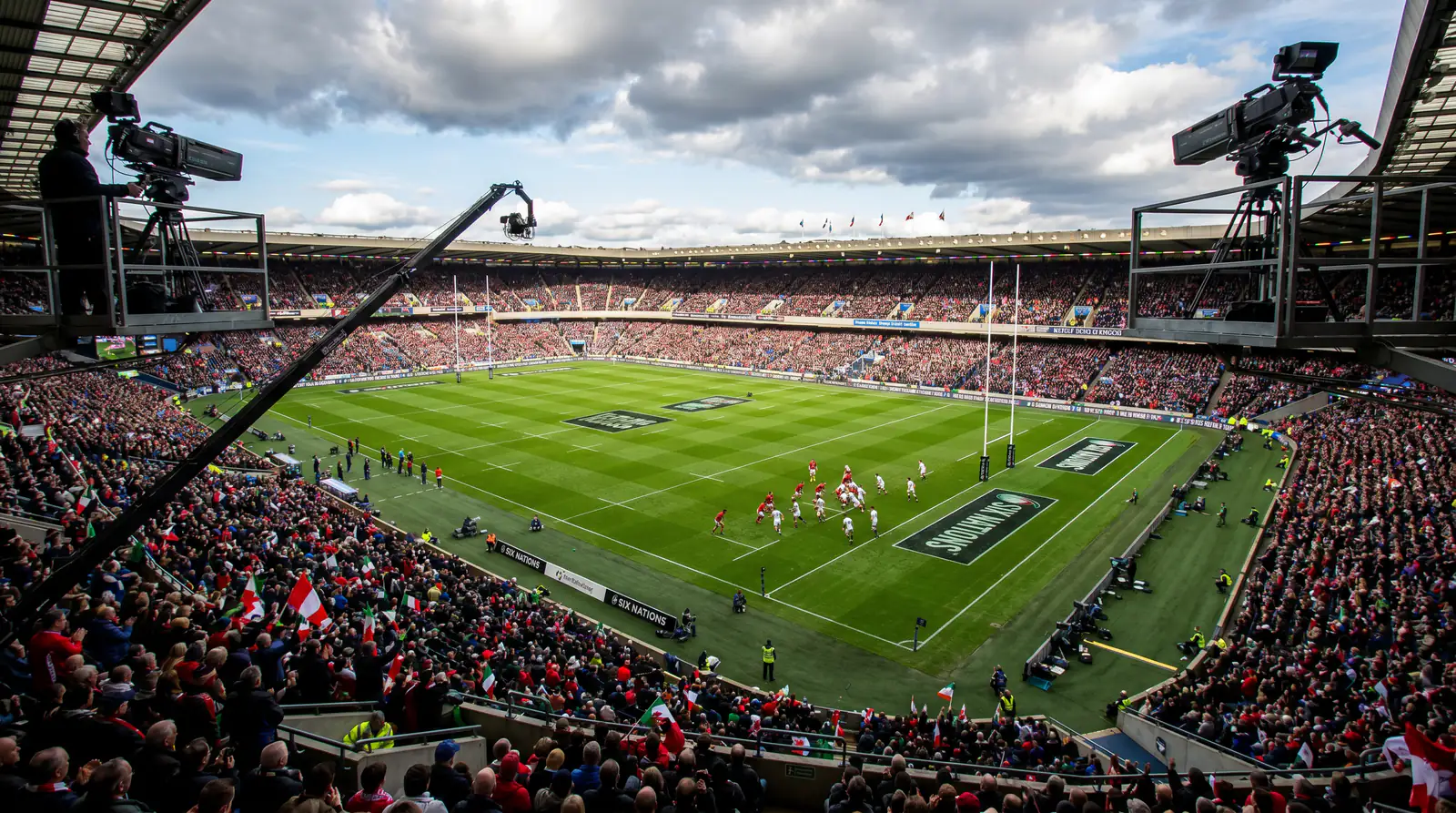
The 2026 Six Nations final between France and England pulled a peak audience of 9.5 million viewers on France 2 alone — 42.5% of the national viewing share. That is not just a broadcasting statistic; it is a betting market statistic. Every pair of eyes on a rugby match represents potential betting activity, and more betting activity means deeper markets, tighter odds and more efficient pricing. Understanding the link between viewership and market depth is one of the least discussed yet most practically useful edges a rugby bettor can develop.
I started tracking this relationship three years ago after noticing that my ability to find value varied dramatically depending on which tournament I was betting on. Six Nations bets were harder to beat than Premiership bets, and Premiership bets were harder than European Challenge Cup bets. The pattern mapped almost perfectly onto viewership figures, and once I understood why, my allocation strategy changed permanently.
Why Higher Viewership Means Tighter Odds for Bettors
Super League in 2025 set a 12-team era attendance record of more than 1.62 million fans, with television audiences climbing 52% year on year. That surge in attention brought a corresponding increase in betting volume, which compressed the odds on Super League matches measurably compared to prior seasons.

The mechanism is straightforward. When more people watch a match, more people bet on it. When more people bet, the bookmaker receives a larger pool of money to balance, which allows them to operate on thinner margins while still generating profit. Thinner margins mean the odds offered to you are closer to “true” probabilities. In an efficient market, that is bad news for bettors looking for mispricings — but the efficiency is not uniform across all market types.
Match result and handicap markets tighten fastest as viewership rises because they attract the broadest range of bettors. Player markets, specials and exotic bets remain softer even in high-viewership fixtures because the volume on those specific selections is still relatively low. This asymmetry is actionable: during high-viewership events, I shift my betting focus away from main markets and toward niche selections where the increased volume has not fully compressed the margins.
Another consequence of high viewership is faster in-play market adjustment. When millions of people are watching simultaneously, the information flow into the market is near-instantaneous. A yellow card, an injury, a momentum swing — the odds shift within seconds because the betting audience processes these events in real time. In low-viewership matches, those adjustments lag, creating brief windows for in-play bettors who are watching the action live.

Tournament Tiers: Where Markets Are Deepest and Shallowest
The 2026 Six Nations opening match — France vs Ireland — drew an average of 7.24 million viewers on French television, a record for a tournament opener. Across the channel, ITV regularly delivers peak audiences above three million for England’s fixtures. These numbers place the Six Nations firmly in the top tier of rugby betting markets, alongside the Rugby World Cup and the British and Irish Lions tour.

I organise rugby betting opportunities into three tiers based on market depth. Tier one — Six Nations, World Cup, Lions — offers the tightest main-market odds, the widest range of available markets, and the highest maximum stakes. The trade-off is that finding value in main markets is harder because the pricing is near-efficient. Tier two — Premiership, Top 14, Super League, URC, Champions Cup — offers moderate depth with meaningful inefficiencies, particularly during less-televised midweek fixtures or rounds that clash with international windows. Tier three — Championship, Challenge Cup, Sevens circuit, WXV, women’s internationals — offers the widest pricing but also the thinnest markets, lowest maximum stakes and greatest risk of line manipulation.
My bankroll allocation follows this structure directly. I stake smallest on tier one (where my edge is thinnest), largest on tier two (where the balance of liquidity and inefficiency is optimal), and selectively on tier three (where the value can be enormous but the execution risks are higher).

Thin Markets: When Low Viewership Works Against You
Andrew Rhodes, chief executive of the Gambling Commission, has been blunt about the risks of unlicensed operators, stating that he cannot understand why anyone in the licensed industry would want to do business with a company supporting illegal competition. That sentiment applies equally to the market structure of thin rugby betting markets, where the lack of competitive betting volume creates conditions that work against bettors in several ways.

In a thin market, the bookmaker’s overround is wider because they need a larger margin to compensate for the risk of a single large bet distorting their book. Odds can move dramatically on relatively small stakes, which means your own bet can shift the line against you. Maximum bet limits are lower, capping your ability to exploit any edge you do find. And the pricing itself is less reliable — a bookmaker with limited information and limited volume has less incentive to sharpen their lines.
I have been caught by thin-market dynamics more than once. A Championship rugby fixture I identified as strong value moved three points against me when I placed a relatively modest stake, because there was so little other money in the market. The bet won, but the return was materially lower than what my analysis had projected. Thin markets reward patience and small stakes — you cannot treat them like Premiership fixtures where your bet disappears into a deep pool.
The practical lesson: match your staking to the market depth, not just to your conviction. A strong-conviction bet on a poorly-televised Championship midweek fixture should still carry a smaller stake than a moderate-conviction bet on a Saturday afternoon Six Nations match. The liquidity difference justifies the adjustment, and protecting yourself from thin-market slippage is as important as finding the value in the first place. For a closer look at how this principle applies to specific tournament betting, the Six Nations betting guide covers the deepest rugby market in detail.

Does higher TV viewership always translate to better rugby betting odds?
Higher viewership generally leads to tighter odds on main markets (match result, handicap) because increased betting volume allows bookmakers to operate on thinner margins. However, the relationship is not linear — niche markets within the same fixture may remain soft because the additional volume concentrates on popular selections. The benefit to bettors is not necessarily better odds but more reliable pricing and deeper liquidity.
Which rugby tournaments have the thinnest betting markets in the UK?
The thinnest markets are typically found in the English Championship, early-round Challenge Cup fixtures, lower-tier SVNS circuit events, and WXV internationals between non-tier-one nations. These fixtures attract minimal TV audiences and correspondingly low betting volume, resulting in wider bookmaker margins, lower maximum stakes and less reliable pricing. Women’s domestic club rugby also has extremely thin or nonexistent markets at most operators.
