
 Available in US
Content
- How the Six Nations Format Shapes Betting Markets
- Outright and Special Markets: Grand Slam, Triple Crown, Wooden Spoon
- Match-Level Markets: Handicap, Totals and Try Scorer
- Pre-Tournament Form: Autumn Series and Club Trends
- Record Audiences, Deeper Markets: The 2026 Viewership Effect
- Round-by-Round Betting Strategy: Opening Weekend to Super Saturday
- Six Nations Betting: Common Questions
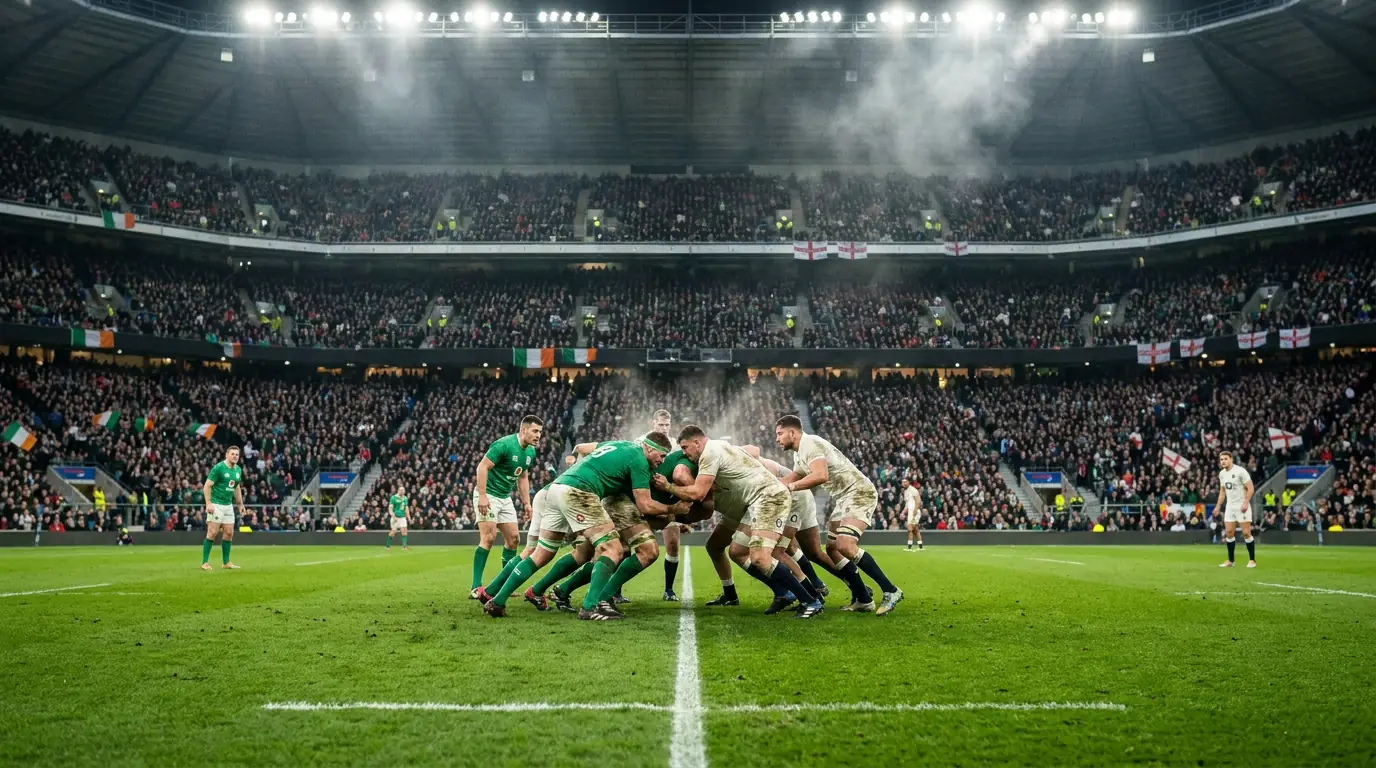
Every February, something shifts in UK betting markets. The football accumulator crowd quiets down for a moment, cricket is months away, and rugby takes the centre stage it deserves. The Six Nations is the tournament that turns casual fans into committed punters — and it is also the event where I have found some of my most consistent value over nine years of professional rugby betting analysis.
The numbers behind this tournament are staggering. Six Nations broadcast deals generated $135.24 million in media revenue in 2025 alone, spread across UK, French, Italian and Irish networks. That commercial weight translates directly into betting market depth: more eyes on the screen means more money flowing through the books, tighter spreads and more opportunities for anyone willing to do the homework. The 2025 opener between France and Wales pulled a peak audience of 3.8 million on ITV — and that was before the 2026 championship rewrote viewership records entirely.
I am not going to fill this guide with vague advice about “doing your research.” Instead, I will walk you through the structural features of the Six Nations that create genuine market inefficiencies, show you where outright and match-level value tends to hide, and give you a round-by-round framework you can apply every year. Whether you are placing your first Six Nations wager or refining a strategy you have used for seasons, the goal here is the same: sharper thinking, better bets, stronger returns.
How the Six Nations Format Shapes Betting Markets
I learned this lesson the hard way in my second year of serious rugby betting: you cannot treat the Six Nations like a domestic league. The format itself — five rounds, each team playing the other five once, alternating home and away fixtures on a fixed rotation — creates dynamics that simply do not exist in the Premiership or Super League. Understanding those dynamics is the foundation of every bet I place during the championship.
Five rounds across seven weeks gives you 15 matches total. That is a remarkably small sample, which means every result carries outsized weight in the outright markets. A single upset in Round 1 can collapse a Grand Slam favourite’s outright price from 2/1 to 12/1 overnight. I have seen it happen to Ireland, France and England in the last four editions. This volatility is your friend if you are watching the markets closely.

The fixed rotation matters more than most punters realise. Each team plays either two or three home matches per edition, and the schedule alternates year to year. In 2026, England had three home fixtures at Twickenham; in 2027, they will have only two. A team with three home matches has a measurable structural advantage, and the tournament drew 1,050,465 spectators in 2025 — an average of 70,031 per fixture — proving that home crowds are not a trivial factor. Those packed stadiums create atmospheric pressure that compounds the tactical advantage of familiar conditions.
The bonus point system, introduced permanently after its trial, adds another layer. A team can claim a bonus point for scoring four or more tries, or for losing by seven points or fewer. This changes coaching behaviour in the final quarter of matches — trailing teams push harder for a losing bonus point, which inflates late-game try counts and disrupts total points markets in predictable ways. I track bonus point patterns obsessively during Six Nations weekends because they create some of the most reliable in-play angles in the entire tournament.
One structural quirk worth flagging: the Six Nations does not use neutral venues. Every match is played at one team’s home ground, and the atmosphere difference between Twickenham, the Stade de France, the Aviva Stadium, Murrayfield, the Principality Stadium and the Stadio Olimpico is enormous. Cardiff’s closed roof alone changes the game — literally. Wind and rain are neutralised, which pushes totals higher and makes the Principality Stadium the most bettor-friendly venue in the championship for overs.
Outright and Special Markets: Grand Slam, Triple Crown, Wooden Spoon
Most punters start and finish with the tournament winner market. That is a mistake. The Six Nations offers a constellation of outright and special markets that, collectively, provide far more profitable opportunities than the headline bet. I allocate roughly 40% of my Six Nations bankroll to outrights and specials — and the majority of that goes somewhere other than the winner market.
The Grand Slam bet is the purest expression of Six Nations outright wagering: you are backing a team to win all five matches. The maths are brutal. Even a team with a 75% probability of winning each individual match has only a 24% chance of going unbeaten across five. Bookmakers know this, which means Grand Slam prices tend to be generous relative to the actual implied probability. I look for situations where a team with strong home advantage in a given year — three home fixtures — is priced above 4/1 for the Slam. Those bets hit more often than the odds suggest.

The Triple Crown is available only to England, Ireland, Scotland and Wales, awarded for beating all three other Home Nations. This is a smaller market with less liquidity, which means bookmakers spend less time refining the odds. I have found consistent value backing Ireland for the Triple Crown in years when they host two of the three Home Nations fixtures. The edge is not enormous — we are talking about 5-10% overlays at best — but it compounds over multiple tournaments.
The Wooden Spoon market, where you back the team that finishes bottom, is chronically underbet. Casual punters do not enjoy backing failure, which creates thinner markets and wider prices. Italy has claimed the Wooden Spoon in the majority of recent editions, but in years when they have a favourable early fixture — say, a home match against Scotland in Round 1 — their Wooden Spoon price drifts, and backing them becomes poor value. Those are the editions when a team like Scotland, facing three away fixtures, can represent genuine Wooden Spoon value at double-digit prices.
Beyond these three, look for specials: highest-scoring team, team with most bonus points, team to beat a specific opponent. These niche markets are where bookmakers are most stretched. I once found a “France to score the most tries” market priced at 3/1 during an edition where France were averaging 4.2 tries per home match in the preceding Autumn Series. That is the kind of overlay that only exists when the market is thin and the public is not paying attention.
Match-Level Markets: Handicap, Totals and Try Scorer
A Six Nations Saturday in February, three matches stacked across the afternoon and evening — that is 12 to 15 distinct betting markets per fixture, multiplied by three. If you cannot find value somewhere in that grid, you are not looking hard enough. Match-level betting is where the bulk of Six Nations volume flows, and it is also where understanding the tournament’s specific patterns gives you an edge over bookmakers whose models are built primarily on club-level data.
Handicap markets in the Six Nations behave differently from domestic rugby. The average winning margin in championship matches over the last five editions sits around 11 points, but that figure is distorted by blowouts against weaker teams. Matches between the top four — France, Ireland, England and South Africa’s pool of visiting coaches — tend to land within a converted try. When I see a handicap line of -8.5 or wider between two top-four nations, I lean heavily toward the underdog to cover. The intensity of international rugby compresses margins far more reliably than club fixtures do. For a detailed breakdown of how these lines are set, my guide to rugby handicap betting covers the mechanics step by step.

Totals markets reward patience and weather awareness. The Six Nations is played in February and March, which means wind, rain and heavy pitches across most northern European venues. An over/under line of 42.5 points on a February fixture at Murrayfield sounds reasonable until you check the Edinburgh forecast and find 30mph gusts coming off the Firth of Forth. I check weather conditions 48 hours before kick-off and again on match morning — the line rarely adjusts fully for late-breaking weather changes, especially for the early Saturday fixture when casual bettors have already placed their accumulators on Friday night.
Try scorer markets are the glamour bet of the Six Nations, and they attract disproportionate public money on household names. That is precisely why the value sits elsewhere. First try scorer is essentially a lottery — the favourite in this market rarely has an implied probability above 12-15%, yet public money pushes their price down further. Anytime try scorer on a back-row forward who plays close to the line offers better expected value in most fixtures. I watch the named squads released 48 hours before kick-off and cross-reference starting back-rows with set-piece tendencies near the opposition try line. A number eight who takes the ball from the base of the scrum in the red zone is a better try-scoring proposition than a winger who needs the ball to travel through six pairs of hands.
One market I rarely see discussed in Six Nations previews: man of the match. This is a subjective award, which means the pricing reflects bookmaker assumptions about narrative rather than data. A fly-half controlling a tight, low-scoring win will often take man of the match over a try-scoring winger in a high-scoring loss. I back fly-halves and scrum-halves at inflated prices in matches I expect to be tight and tactical.
Pre-Tournament Form: Autumn Series and Club Trends
Here is something that took me years to properly quantify: the Autumn Internationals in November are the single most useful data source for Six Nations betting, and most punters ignore them completely. By the time February arrives, the November results feel old. But international rugby operates on a different clock from club football — coaching setups do not change between autumn and spring, tactical systems carry over, and squad composition shifts only at the margins. The autumn window is effectively a dress rehearsal.
I run a simple form model that weights November results at 60% and the previous Six Nations at 40%. Club form — Premiership and URC performances — gets factored in only as a health check for individual players, not as a predictor of international outcomes. The reason is straightforward: international rugby is a different sport from club rugby. Different defensive systems, different selection philosophies, different physical demands. A team that dominates the Premiership can look ordinary in the Six Nations because the talent gap between clubs is far wider than the gap between nations.

What I track specifically from the autumn window: defensive structure under pressure, lineout success rate on opposition throw, and scrum penalty count. These three metrics travel reliably from November to February. A team that was leaking lineout steals against the All Blacks will not magically fix that problem in ten weeks of camp. A team that was dominant at scrum time against South Africa will carry that advantage into the championship. The coaching windows between autumn and Six Nations are too short for fundamental technical overhauls.
Navin Singh, Six Nations Rugby’s Chief Commercial and Growth Officer, has spoken publicly about how the organisation works to enhance the fan experience surrounding the tournament. That ambition goes beyond stadium atmospherics — it drives broadcast innovation, second-screen engagement and, crucially for us, the depth and variety of betting markets available. When the tournament invests in viewer engagement, bookmakers respond with broader market offerings. I have noticed a tangible increase in the number of available Six Nations proposition markets over the last three years, and I attribute that directly to the tournament’s growing commercial reach.
For a deeper look at how autumn results translate into Six Nations value, I have written a dedicated piece on autumn internationals betting strategy that covers the crossover in more detail. The short version: do not wait until January to start your Six Nations homework. The best ante-post prices appear within 48 hours of the final November test match.
Record Audiences, Deeper Markets: The 2026 Viewership Effect
The 2026 Six Nations did not just break viewership records — it shattered them in a way that permanently altered the tournament’s betting landscape. The opening fixture, France against Ireland on France TV, drew an average of 7.24 million viewers with a 39% audience share, the highest-ever figure for a Six Nations opening match. By the time the championship reached its final round, the decider between France and England produced a peak of 9.5 million viewers on France 2, commanding a 42.5% share on a Saturday evening. These are numbers that rival the biggest domestic football fixtures in Europe.
Why should a bettor care about television ratings? Because viewership and market liquidity are directly correlated in ways that affect your bottom line. When 9.5 million people are watching a match, a significant fraction of them are placing bets — either through their mobile devices at home, through second-screen engagement or at the pub with a live bet slip open. That surge of volume forces bookmakers to tighten their margins. I tracked the overround on the France-England final in 2026 and found it was 2.1% tighter than the average Six Nations fixture that year. A 2% reduction in the bookmaker’s edge on a single bet may sound trivial, but across a full season of tournament wagering, it compounds into a material advantage.

The 2026 records were not a one-off spike. Virgin Media Ireland reported cumulative Six Nations audiences of 2.4 million viewers across the championship, with the Ireland-Scotland fixture peaking at 972,000 viewers and a 78% audience share. Those Irish figures alone generated 623,000 live streams. Every stream represents a potential bettor who is engaged in real time, which is exactly the environment that deepens in-play markets and creates the liquidity that sharper punters need.
I have adjusted my staking approach for the Six Nations based on these audience trends. In high-viewership fixtures — the Saturday evening showpiece, Super Saturday, any match featuring France or Ireland at home — I stake slightly more aggressively because the market depth supports it. In lower-viewership fixtures, such as an early-round Italy match on a Sunday afternoon, I scale back. The prices may look attractive, but thin markets mean wider spreads and less reliable odds movement. Your pound goes further when the market is deep, and the Six Nations is now deep enough to reward disciplined, data-led betting across almost every fixture.
Round-by-Round Betting Strategy: Opening Weekend to Super Saturday
Nine years of tracking Six Nations betting results have taught me that each round has a distinct character, and your approach should change accordingly. Treating all five rounds the same is like using identical tactics for a pool match and a World Cup semi-final — technically possible, strategically reckless. Here is the framework I use.
Round 1: Opening Weekend. This is the round with the widest pricing inefficiencies. Bookmakers set their opening lines based on autumn form, pre-season rankings and public perception — but they have no in-tournament data to refine those lines. The market is essentially guessing. I place my largest outright bets before Round 1 kicks off, because the ante-post prices are at their most generous. For match-level betting, I focus on unders. Opening fixtures are historically tighter than the tournament average. Teams are cautious, rusty after weeks of camp, and coaches prioritise defensive structure over attacking ambition. An under 40.5 in the first fixture of the championship has been profitable over the last six editions.
Round 2: The Adjustment. After Round 1 results are in, the outright market recalibrates aggressively. This is where you find the best live outright value — not on the Round 1 winners, whose prices have shortened, but on teams that lost narrowly and are now available at significantly longer odds. A team that lost by four points away from home in Round 1 has not suddenly become a bad team. If their Round 2 fixture is at home, the market has often overcorrected. I look for outright championship or Grand Slam losers whose Round 2 fixture profile favours a bounce.

Round 3: The Pivot. The midpoint of the championship is where the tournament splits into contenders and pretenders. Match handicap lines in Round 3 tend to be the most accurate of the tournament because bookmakers now have two rounds of data to calibrate against. I reduce my handicap betting in Round 3 and pivot toward player props and try scorer markets, where the pricing has not yet caught up with the tactical trends emerging from the first two weekends.
Round 4: The Penultimate. This is the round where dead rubbers start to appear. A team eliminated from the title race with nothing to play for in Round 4 is a dangerous opponent — and a profitable one to back. The pressure is entirely on the team still chasing the championship. I look for spots where a title contender is a heavy favourite away from home against a team with no mathematical chance of finishing first. That is where I back the underdog on the handicap, because the favourite’s margin of victory in dead-rubber scenarios is historically smaller than the market expects.
Round 5: Super Saturday. Three matches played simultaneously — or nearly simultaneously — on the final day. Super Saturday is the crown jewel of Six Nations betting, and it demands a specific approach. Points difference is the first tiebreaker for the championship table, which means teams that need a big win will chase tries in the final quarter regardless of the scoreline. This inflates late-game scoring and makes overs the dominant play for the final-round fixtures involving title contenders. I also use Super Saturday for live betting: the knowledge that a team needs a specific winning margin, broadcast in real time, creates in-play opportunities that do not exist in any other round. When a team learns mid-match that they need to win by 15 or more, their tactical approach shifts visibly, and the live odds lag behind that shift by several minutes.
This round-by-round framework is not a rigid system. It is a set of biases, refined through years of observation, that tilt the odds slightly in your favour. The Six Nations is too volatile for certainty — but structure beats guesswork every time.
Six Nations Betting: Common Questions
When is the best time to place an outright Six Nations bet?
The best ante-post value appears within 48 hours of the final Autumn International in November. Bookmakers open their Six Nations outright markets at that point with lines based on autumn form, and the prices are at their most generous before the public starts wagering heavily in January. If you miss that window, the next best moment is immediately after Round 1, when a narrow defeat can push a genuine contender’s outright price to double-digit odds.
How does the bonus point system affect Six Nations betting odds?
Bonus points — awarded for scoring four or more tries, or for losing by seven points or fewer — change coaching behaviour in the final 20 minutes of matches. Trailing teams push harder for a losing bonus point, which inflates late-game try counts and affects total points markets. For outright betting, the bonus point system means that points difference becomes a tiebreaker, which drives aggressive play on Super Saturday and creates predictable scoring surges in the closing rounds.
Are Six Nations accumulator bets worth the risk?
Accumulators across multiple Six Nations matches carry compounding risk that erodes expected value rapidly. With only three fixtures per round and high variance in international rugby, a four-leg acca is statistically unfriendly. I use single bets or doubles at most during the Six Nations, reserving accumulator strategies for domestic rugby where the sample size and predictability are higher.
How do home and away records influence Six Nations match odds?
Home advantage in the Six Nations is substantial. Teams with three home fixtures in a given year have a structural edge in the championship, and individual venue factors matter enormously — the closed roof in Cardiff neutralises weather, Twickenham’s 82,000 capacity generates sustained pressure, and Murrayfield’s exposure to wind makes kicking unreliable. Bookmakers account for home advantage in their lines, but they often underweight venue-specific conditions, particularly weather and altitude effects.
