
 Available in US
Content
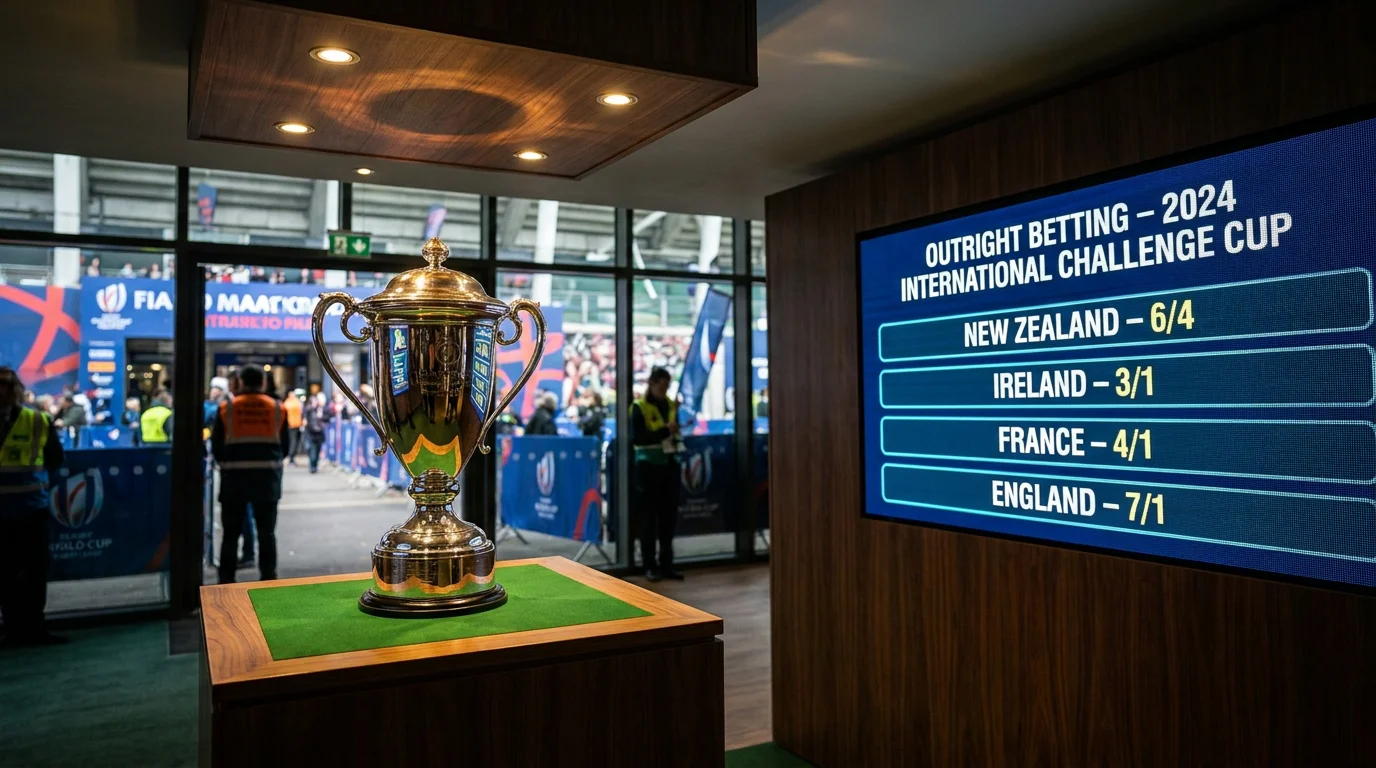
I placed my best ever rugby outright bet eleven months before the tournament started. It was a World Cup winner selection at 12/1, taken when the initial ante-post market opened and before a single warm-up match had been played. The team I backed did not win the tournament — they lost in the semi-final — but I had taken the bet each way, and the place portion returned a healthy profit. The key was not prediction. It was timing. Outright markets are the one area of rugby betting where patience is rewarded more consistently than insight, because the prices available at market opening are almost always more generous than the prices available once the competition is underway.
Outright betting — backing a team to win a tournament, a player to finish as top try scorer, or a side to achieve a specific season outcome — is structurally different from match betting. The timeframe is longer, the variables are greater, and the emotional discipline required is higher because your money is committed for weeks or months rather than 80 minutes. But for bettors who can tolerate that commitment, outrights offer some of the most exploitable inefficiencies in the rugby market.
When to Place an Outright Rugby Bet for Maximum Value
The Six Nations generates media revenues exceeding $135 million, and the outright market for the tournament winner is one of the most actively traded in rugby. Prices open weeks before the first match, and they move continuously as the tournament approaches and progresses. Understanding when to enter the market is more important than understanding which team to back.
Ante-post prices — the odds available before the tournament starts — carry a premium for uncertainty. The bookmaker does not know who will be injured, who will be in form, or how the draw and scheduling will unfold. That uncertainty inflates the price on every selection, and the inflation is greatest for teams in the 4/1 to 12/1 range. Favourites at short prices carry less ante-post premium because the market is more confident in their assessment. Long shots carry more premium but the probability of cashing is too low to make the inflation worthwhile in most cases.
The sweet spot for ante-post value is the third or fourth favourite in a competitive tournament. In the Six Nations, this is typically a team like England, Scotland or Wales depending on the year — sides that are credible contenders but not market leaders. If you can identify a team in this range whose pre-tournament form (autumn internationals, club performance of their key players) suggests they are undervalued, placing the outright bet before the first round locks in a price that will almost certainly shorten once the tournament begins and the team wins their opening match.
The worst time to place an outright is after the first round of a tournament. A team that wins impressively in round one sees its outright price collapse — sometimes by 50% or more — as recreational money piles in. If you did not back them before the tournament, the value has gone. Either you identified the team early enough to capture the ante-post price, or you wait for the in-tournament price to present fresh value (which usually requires the team to lose a match and see their odds drift back out).

Player Outrights and Why They Reward Homework
Top try scorer markets are my favourite outright play in rugby because they are priced less efficiently than tournament winner markets. Bookmakers set tournament winner odds with significant analytical resources and sharp money from professional syndicates. Player markets receive less attention from both the operator and the betting public, which means the prices are softer and the edge available to an informed bettor is larger.
The key to top try scorer betting is understanding positional scoring patterns rather than backing the most famous player. Wings score the most tries in international rugby, but not all wings are equal. The wing who plays on the side of the field where his team’s primary attacking moves finish is more likely to score than the wing on the other side, regardless of individual talent. Left-wing tries outnumber right-wing tries in most Six Nations seasons because the majority of teams run their primary strike plays to the left (where the fly-half’s natural passing arc creates space). This is not a secret, but it is not reflected in the pricing because bookmakers price try scorer markets based on the player’s overall record rather than positional and tactical analysis of how tries are constructed.
The 68% of UK bettors who expect to increase their wagering volume in 2026 will bring more money into these markets, which should tighten pricing over time. But for now, the informational edge available in player outright markets remains wider than in most other areas of rugby betting. The work required — watching teams’ attacking patterns, tracking try-scoring opportunities (not just actual tries), and understanding how squad selection affects the distribution of finishing chances — is substantial, but the reward justifies the effort.

Domestic Season Specials and the Long Game
Beyond tournament winners and player markets, outright betting extends to domestic season specials: Premiership champion, Super League Grand Final winner, top-four finish, relegation. These markets open before the season starts and remain active throughout, with prices adjusting after each round of fixtures.
The Premiership champion market is particularly interesting because of the competition’s structure. The play-off format means that the team that finishes top of the regular season table does not always win the title, which creates a gap between regular-season dominance and outright championship probability. A team that leads the table by ten points in March may be 1/3 to win the league, but their actual probability of winning the play-offs (where the semi-finals and final are single matches) is closer to 40-45%. Single-match elimination introduces variance that the regular season irons out, and that variance means the favourite’s outright price is often too short once the play-off positions are confirmed.

Relegation markets in rugby can offer value when a promoted team is priced as a heavy favourite for immediate relegation. The Premiership’s salary cap structure means promoted teams are not as financially outmatched as they might be in football, and the data shows that promoted sides survive their first season more often than the market implies. If you back a promoted team to avoid relegation at the start of the season when their price is longest, and they pick up a couple of early wins, you are sitting on a bet with significant positive expected value because the market will have adjusted in your favour.

For all outright bets, the crucial discipline is recording your position and reviewing it periodically rather than forgetting about it. An outright bet placed in September on the Premiership can be hedged, traded or left to run depending on how the season develops. I review my open outright positions every month and ask one question: if I did not already hold this position, would I take the current price? If the answer is no and the current price represents profit, I consider cashing out. If the answer is yes, I hold. That simple framework prevents both premature cash-outs and stubborn attachment to positions that the evidence no longer supports. A deeper look at each way strategies for outright rugby bets covers when the place portion of an outright adds genuine value and when it dilutes your return.

When is the best time to place an outright bet on a rugby tournament?
The best value is typically available when ante-post markets first open, weeks or months before the tournament starts. Prices at this stage carry a premium for uncertainty that favours the bettor. The worst time is immediately after the first round, when early results cause sharp price movements driven by recreational money. If you miss the ante-post window, wait for a mid-tournament setback to create fresh value.
Do outright rugby bets include extra time in knockout matches?
Yes. Outright bets on tournament winners are settled based on the official result, which includes extra time and any tiebreaker used in knockout matches (such as penalty kicks in World Cup knock-out rounds). Your outright bet remains live through whatever format is used to determine the winner of each match in the tournament.
