
 Available in US
Content
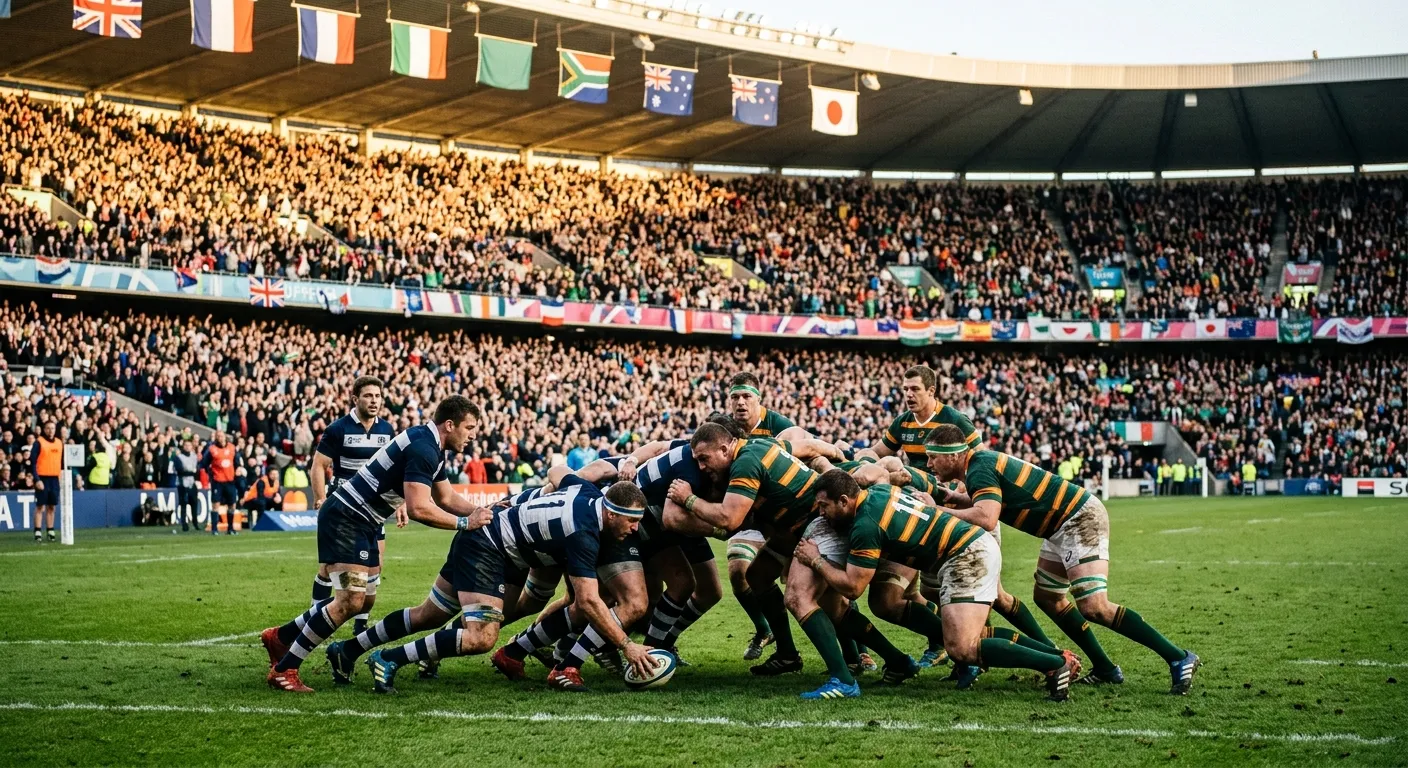
Global sports betting generates roughly $82 billion in annual revenue, and no single rugby event moves the needle like the World Cup. It is the tournament that brings casual fans into betting markets for the first time, creates liquidity spikes that tighten odds across every market type, and produces the kind of upsets that remind seasoned punters why they fell in love with the sport in the first place. I have bet through two full World Cup cycles now, and the patterns that emerge over those eight-year windows are remarkably consistent — if you know when and where to look.
The Rugby World Cup operates on a four-year rhythm that shapes betting markets long before the opening ceremony. Understanding that cycle — when outright prices open, how they shift through qualifying, and where the real value sits at each stage — is the foundation of any serious World Cup betting strategy. Former World Rugby chief executive Brett Gosper once noted that while there is no evidence of match-fixing in rugby, it would be naïve to think the risk could never materialise as global betting interest grows. That growing interest is precisely what makes World Cup markets both deeper and more competitive than any other rugby event.

The Four-Year Betting Cycle: When Outright Markets Open
I placed my first outright World Cup bet almost three years before the tournament kicked off. The price I got on a top-four finish was nearly double what it closed at by the time pool draws were announced. That early-bird value is real, but it comes with a cost: you are locking up capital for years, and your analysis relies on projections rather than confirmed squads.
The four-year cycle has distinct phases. Phase one begins immediately after the previous World Cup final, when bookmakers open skeleton outright markets with wide prices and thin limits. This is the speculative phase — odds reflect reputation more than current form, and prices on non-traditional contenders (Argentina, Fiji, Japan) are at their most generous. Phase two runs from roughly 18 months out, when qualifying results, coaching changes and emerging players start to shape the field. Prices tighten, but there are still pockets of value as the market catches up to reality. Phase three is the final six months, dominated by warm-up fixtures and squad announcements, when the market becomes efficient enough that edges are small and fleeting.
The global gambling market exceeded $643 billion in total revenue in 2025, with the UK contributing around $27 billion — the third-largest share worldwide. That concentration of betting activity means UK bookmakers offer some of the deepest World Cup markets anywhere, and the competition between operators keeps prices sharp. I shop between at least three operators for any outright World Cup bet because the price discrepancies can be significant, particularly in the early phases.

Pool-Stage Bets: Qualification, Margin and Bonus Points
Most casual World Cup bettors focus on outright winners. The savvier approach is to start with pool-stage markets, where the information asymmetry between you and the bookmaker is often larger.
Pool qualification markets — which two teams from each group progress to the quarter-finals — are where I allocate the largest share of my World Cup budget. The draw creates predictable and unpredictable pools. In a group with two clear tier-one sides and two lower-ranked teams, the qualification market is priced tightly and offers little edge. But in pools with three competitive nations, the pricing gets interesting. Bookmakers must assign probabilities that sum correctly across all possible qualification permutations, and the constraints of that calculation create soft lines on the team perceived as the “third favourite” in the pool.

Winning margin markets during pool stages are another overlooked opportunity. Tier-one teams routinely beat pool minnows by 40-plus points, and the margin bands (1-12, 13-24, 25-36, 37+) are priced with surprisingly loose margins because the volume of bets on these games is lower than you might expect. The public backs outrights; the specifics of a Fiji vs Portugal margin interest fewer punters, which means less efficient prices.
Bonus points add a layer of complexity. A team that has already qualified might still chase a try bonus point to improve their quarter-final seeding, which keeps scoring intent high even when the result is settled. Conversely, a team with nothing to play for might rest key players, dramatically changing the complexion of the final pool match. I watch the permutations table obsessively during the group stage and place bets specifically in those final-round pool matches where motivation asymmetry creates clear value.
Quarter-Finals Onward: Knock-Out Market Behaviour
Knock-out rugby is beautiful chaos, and my model’s accuracy drops significantly once the pool stage ends. That honesty is important: anyone who tells you they can reliably predict World Cup quarter-final outcomes is overstating their edge. What I can do is identify structural patterns in how markets behave once the draw is set.
Quarter-final odds tighten dramatically compared to pool-stage pricing because the remaining eight teams are closely matched and the volume of public money surges. The favourite in a quarter-final is typically priced between 1/2 and 4/6, which means you need a strong conviction to bet the short side. I prefer to look at handicaps and totals in knock-out matches, where the emotional weight of the occasion tends to suppress scoring. World Cup quarter-finals have historically produced lower combined point totals than pool matches between the same teams, because coaches prioritise defensive structure and risk management.
Semi-finals amplify that defensive trend further. I lean towards unders and tight handicaps in the final four. The final itself is the most liquid single rugby match in the world, which paradoxically makes it one of the hardest to find value in — the market is so efficient by this stage that edges are razor-thin. My typical approach for the final is to bet small on specific markets like first try scorer or winning margin band, where the wider price variance gives me more room to work with.

The Women’s Rugby World Cup is expanding to 16 teams, which will deepen those markets considerably in coming cycles. I expect the growth in women’s international rugby to mirror what we have seen in other sports — early movers who understand the form dynamics will find generous pricing before the market matures. For those planning ahead to the next major touring event, my British and Irish Lions betting guide covers how tour markets open and where the value sits across a series.

How far ahead can I bet on the next Rugby World Cup?
Most major UK bookmakers open outright World Cup markets within weeks of the previous tournament ending, meaning you can bet nearly four years in advance. Early prices are wide with low maximum stakes, but they offer the best value for patient bettors. As the tournament approaches, limits increase but odds shorten, particularly once the pool draw is conducted.
Do host nations get a measurable advantage in World Cup betting odds?
Yes. Historical data shows host nations outperform their world ranking in World Cup pools and early knock-out rounds. The advantage comes from familiar conditions, crowd support and no travel fatigue. Bookmakers factor this in, but they tend to under-adjust for the psychological boost of a home crowd in knock-out matches, where the pressure is most intense.
