
 Available in US
Content
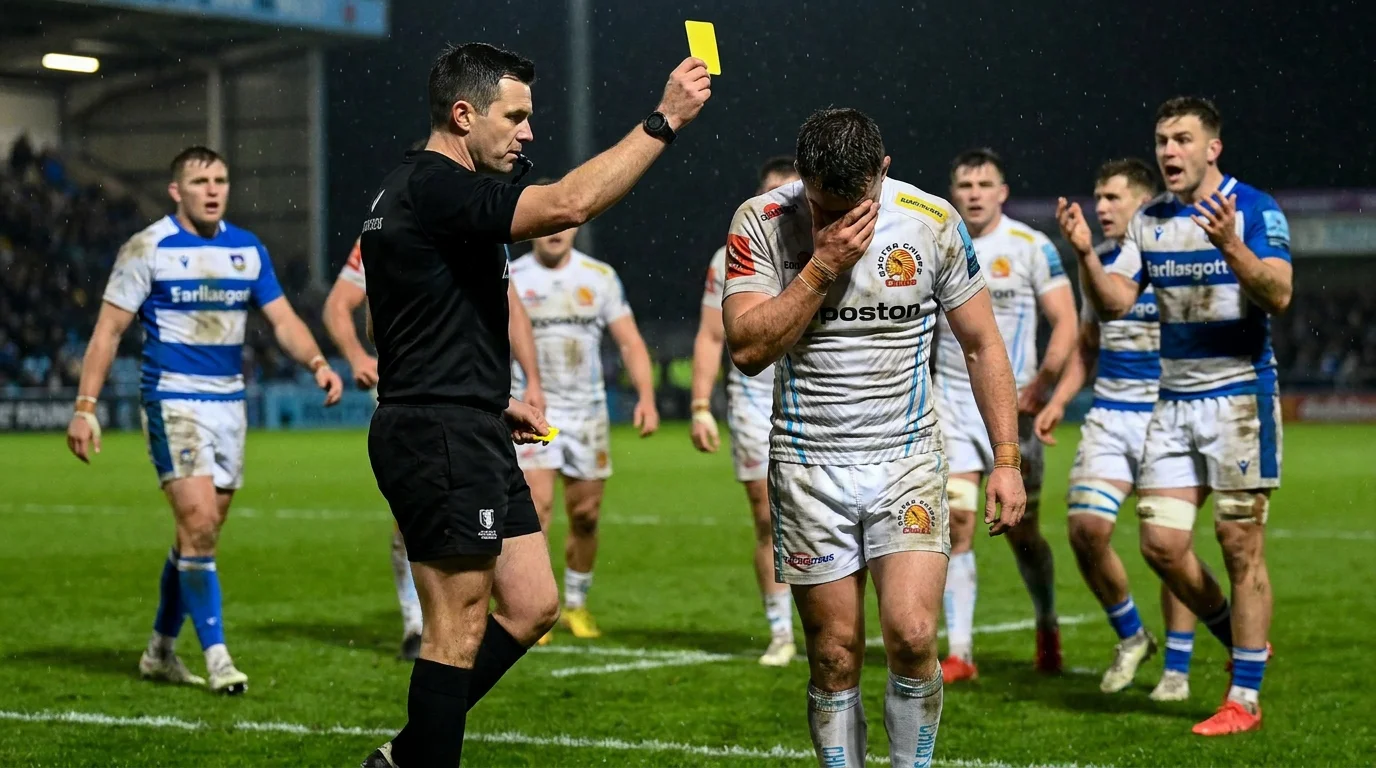
Three-quarters of UK bettors aged 18 to 24 place their wagers on mobile devices — a generation that expects instant markets, live updates and the ability to react to what they are watching in real time. No in-play trigger in rugby is more immediate or more consequential than a card. A yellow card sends a player to the sin bin for ten minutes, reducing a team to 14 players, and the odds shift within seconds. A red card removes a player permanently and reshapes the entire match. Discipline markets let you bet on these moments directly, and understanding them gives you a tactical edge in one of the fastest-growing segments of rugby betting.
I came to card betting through in-play markets. I kept noticing that the biggest in-play odds movements coincided with disciplinary decisions, not tries or penalties. A yellow card in the 55th minute could swing the match result by more than a try scored in the 20th. That observation led me to study discipline markets specifically, and they have become one of my most consistent sources of value.
Yellow Card, Red Card and Total Cards: Available Markets
Discipline markets in rugby have expanded considerably over the past three seasons. The standard offerings at most major UK bookmakers now include: total cards over/under (how many yellow and red cards will be shown in the match), specific player to be carded, first player to be carded, and time of first card. Some operators also offer team cards (total cards for each side) and card-related specials during high-profile Six Nations and Premiership fixtures.

About a third of Premiership matches finish within seven points, and tight matches tend to produce more disciplinary incidents because the pressure at the breakdown and around the ruck is higher when every point matters. That correlation between competitive intensity and card frequency is the foundation of my approach to total cards markets.
The total cards line for a typical Premiership match sits between 1.5 and 2.5 yellow cards. Over markets (more than 2.5 cards) carry odds around 2/1 to 5/2; under markets are priced shorter. The key insight is that card frequency varies by fixture type far more than the market suggests. Derbies, relegation battles and play-off matches produce cards at nearly double the rate of mid-table fixtures with nothing on the line. I adjust my total cards assessment based on fixture context before even looking at the odds.

The Sin Bin Effect: How a Yellow Card Shifts Live Odds
A sin bin in rugby is ten minutes of numerical disadvantage — and ten minutes of opportunity for bettors who are watching and thinking faster than the market adjusts. I have seen match result odds swing by 15-20% within two minutes of a yellow card being shown, and in-play handicap lines shift by four to six points. That volatility is the raw material of profitable in-play betting.

The sin bin effect is not symmetrical. A yellow card to a forward (particularly a prop or lock) weakens the scrum and lineout, compressing the carded team’s ability to gain territory through set pieces. A yellow card to a back (especially a centre or fullback) opens a channel in the defensive line that the opposition can exploit with structured phase play. My in-play reaction depends on the position of the carded player and the attacking capability of the team with the numerical advantage. A sin bin against a tight-head prop when the opposition has a dominant scrum is a much bigger deal than a sin bin against a wing in a low-scoring match.
The timing of the card matters enormously. A yellow card in the first ten minutes has less impact on in-play odds than one in the final twenty, because the bookmaker prices in the possibility of the carded team recovering during the remaining 70 minutes. Late cards, especially between the 60th and 75th minutes, produce the sharpest odds movements because the carded team has no time to regroup. I focus my in-play card-related bets on this window, where the market’s reaction often overshoots the actual impact.

Referee Tendencies: A Data Point Most Bettors Overlook
Here is the edge that very few rugby bettors bother to research: referees are not interchangeable. Each official has a distinct threshold for card-worthy offences, a personal tolerance for repeated infringements, and a communication style that either defuses or escalates confrontation. Knowing who is refereeing a match tells me more about the likely card count than the two teams’ disciplinary records combined.

I maintain a simple database tracking every Premiership and Six Nations referee’s card-per-match average, split by competition. Some referees consistently average fewer than one yellow card per match; others average two or more. The spread is wide enough to be actionable — a referee who averages 2.3 cards per match officiated a fixture priced at over 1.5 cards at even money is a significantly better bet than the same market under a referee who averages 0.9.
Referee appointment announcements are published by the relevant governing bodies in advance of each round. I check appointments as soon as they are released and cross-reference with my database before the market has fully priced in the referee factor. The window between appointment announcement and market adjustment is typically 24 to 48 hours — long enough to place a bet at value odds if the referee’s tendencies diverge from the market’s default pricing.

Card and discipline markets reward a specific kind of bettor: one who watches matches closely, tracks data that is not widely available, and reacts to in-play developments faster than the crowd. It is a niche within a niche, and that is precisely why value persists. For more on how sin bins and discipline interact with live betting strategy across all rugby markets, the in-play betting guide covers the broader tactical framework.
Do bookmakers offer over/under markets on total cards in rugby?
Yes. Most major UKGC-licensed bookmakers offer total cards over/under markets for Premiership and Six Nations fixtures. The standard line sits at 1.5 or 2.5 yellow cards. Some operators extend this to team-specific card totals and time-of-first-card markets for high-profile matches. Availability is thinner for lower-tier competitions and women’s rugby.
How does a red card differ from two yellow cards for betting purposes?
A red card removes a player for the remainder of the match with no replacement, while two yellow cards (resulting in a red) have the same permanent effect but include a prior ten-minute sin bin period during which the team was already a player short. For total cards markets, two yellows count as two cards; a straight red counts as one. For match result and handicap betting, the practical impact is similar — permanent numerical disadvantage — but the timing differs because the two-yellow scenario means the team has already played short-handed before the dismissal becomes permanent.
