
 Available in US
Content
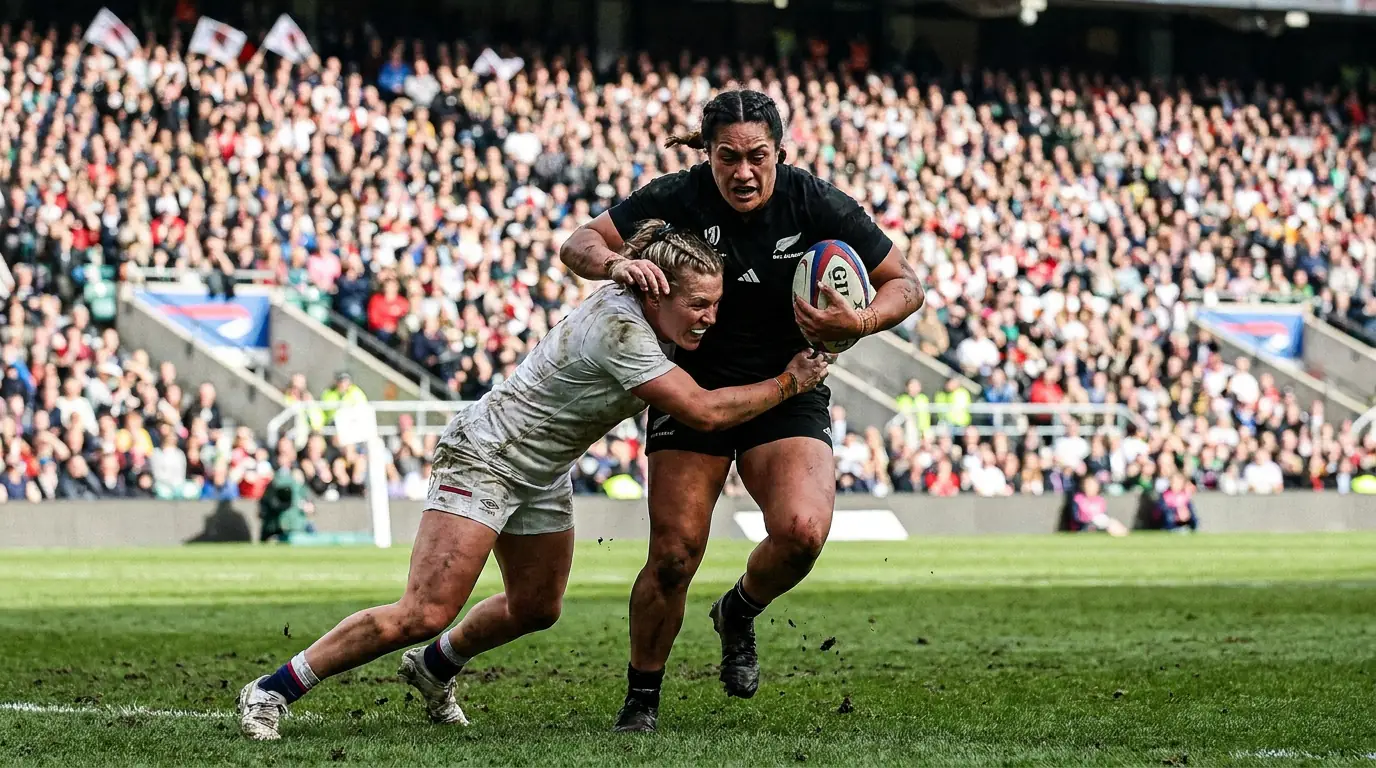
The Women’s Six Nations 2026 drew 279,760 spectators across its fixtures — a figure that would have been unthinkable five years ago and one that signals a market in genuine expansion. Women’s rugby betting is where men’s rugby betting was a decade ago: thin markets, limited data, casual pricing and, for those willing to invest the research time, some of the most accessible value in all of sport. I have been tracking women’s rugby markets for three seasons now, and my returns in this space have consistently outperformed my men’s rugby betting precisely because the competition among sharp bettors is almost nonexistent.
Betfred’s sponsorship of the women’s Super League alongside the men’s competition reflects a commercial reality — broadcasters and sponsors recognise the growth trajectory, and bookmakers are following, albeit slowly. The gap between commercial investment and betting market depth is your window of opportunity, and it will not stay open forever.
Which Women’s Rugby Markets Do UK Bookmakers Offer
The honest answer is: fewer than you want, but more than you might expect. Three years ago, finding any pre-match odds on a Women’s Six Nations fixture required hunting through niche operators. Today, every major UKGC-licensed bookmaker offers match result markets on Women’s Six Nations and Women’s World Cup fixtures, and several extend to handicap and totals lines during peak tournament weekends.
Match result is the most widely available market and the one with the tightest margins. Handicap lines appear less consistently — you will find them for high-profile fixtures (England vs France, for example) but not always for matches between lower-ranked sides. Totals markets are the rarest, partly because bookmakers lack sufficient historical data to set confident lines and partly because the scoring patterns in women’s rugby are still evolving as the professional game matures.
Try scorer markets — first, last and anytime — are available for Women’s Six Nations matches at most major operators but typically carry wider margins than the equivalent men’s markets. The odds reflect the bookmaker’s uncertainty rather than a genuine assessment of probabilities, which creates value for bettors who have done their homework on squad selections and attacking structures.

My approach to women’s rugby betting is to focus exclusively on the tournaments where market coverage is deepest: the Women’s Six Nations, the Women’s World Cup, and WXV (the tiered international competition that replaced the old cross-hemisphere friendlies). Domestic club markets are too thin and too inconsistent to bet reliably — I monitor them for form insights but place my money on international fixtures.
Women’s Six Nations, WXV and the Expanded RWC
The Women’s Six Nations is the flagship event for women’s rugby betting in the UK, and the 2026 edition proved that the audience is there. The tournament structure mirrors the men’s competition — five rounds of matches over seven weeks — which gives bettors a structured, predictable window to focus their analysis.

What differs from the men’s game is the competitive balance. England and France have been dominant forces, and the gap between the top two and the rest of the field is wider than in the men’s Six Nations. That dominance compresses the match result market: England might be priced at 1/20 against Italy, which offers zero betting value. The opportunity lies in handicap markets, where the question shifts from “who wins” to “by how much,” and in outright markets, where the battle between England, France and increasingly competitive Ireland creates genuine three-way tension.
The Women’s Rugby World Cup is expanding to 16 teams in future editions, up from the previous 12-team format. That expansion brings more matches, more market coverage and more pricing inefficiency. New entrants to the World Cup will be underresearched by bookmakers, creating the kind of information asymmetry that seasoned bettors thrive on. I am already building form databases on teams likely to qualify for the expanded tournament — that early investment will pay dividends when the betting markets open.

WXV, the tiered international competition, runs annual events that feed into World Cup qualification. Betting coverage is thinner than for the Six Nations, but the matches themselves are highly informative for building form models. I watch WXV results primarily as a leading indicator for Six Nations and World Cup betting rather than as a betting event in its own right.
Limited Data, Hidden Value: How to Research Women’s Rugby
The scarcity of publicly available data on women’s rugby is simultaneously the biggest obstacle and the biggest opportunity. In men’s rugby, every Premiership match generates reams of Opta statistics, detailed post-match analysis from dozens of media outlets, and a deep well of historical data. Women’s rugby has none of that infrastructure yet. Match statistics are harder to find, video analysis is less widely available, and historical datasets are too shallow for robust statistical modelling.
My workaround is manual research. I watch every Women’s Six Nations match in full (they are all broadcast on BBC or streaming platforms), take my own notes on attacking structures, defensive patterns and individual player form, and maintain a private database that tracks scoring sequences, lineout success rates and penalty counts. It takes about three hours per round of fixtures to update, and it gives me an information edge that no amount of statistical modelling could replicate at this stage of the sport’s development.

Social media is surprisingly useful for women’s rugby research. Players and coaches are more accessible and candid on platforms than their men’s counterparts, and team announcements often come with insights about tactical plans or injury updates that do not make it into mainstream rugby media. Following the official accounts of each national union and the key beat reporters who cover women’s rugby is a low-effort, high-reward research habit.

The value in women’s rugby markets exists because the majority of bettors — and, frankly, most bookmakers’ traders — are not doing this work. The market is underresearched, the pricing is soft, and the growth trajectory ensures that opportunities will expand before competition among sharp bettors catches up. Getting in now, building your knowledge base and establishing form models while the market is still developing is the smartest long-term play I can recommend. For those interested in the niche crossover between women’s rugby and sevens betting, the sevens guide covers format-specific dynamics that apply to both men’s and women’s events.
Do all major UK bookmakers offer women’s rugby markets?
All major UKGC-licensed bookmakers now offer match result markets for Women’s Six Nations and Women’s World Cup fixtures. Handicap, totals and try scorer markets are available from the larger operators for high-profile matches, particularly England and France fixtures. Coverage for domestic club competitions and lower-tier internationals remains inconsistent.
How does the Women’s Six Nations compare to the men’s tournament for betting depth?
The men’s Six Nations offers significantly deeper markets across more categories, tighter margins and higher maximum stakes. The women’s tournament provides match result markets universally and handicap lines for most fixtures, but totals and player markets are less consistently available. The gap is narrowing each year as viewership and betting volume grow.
