
 Available in US
Content
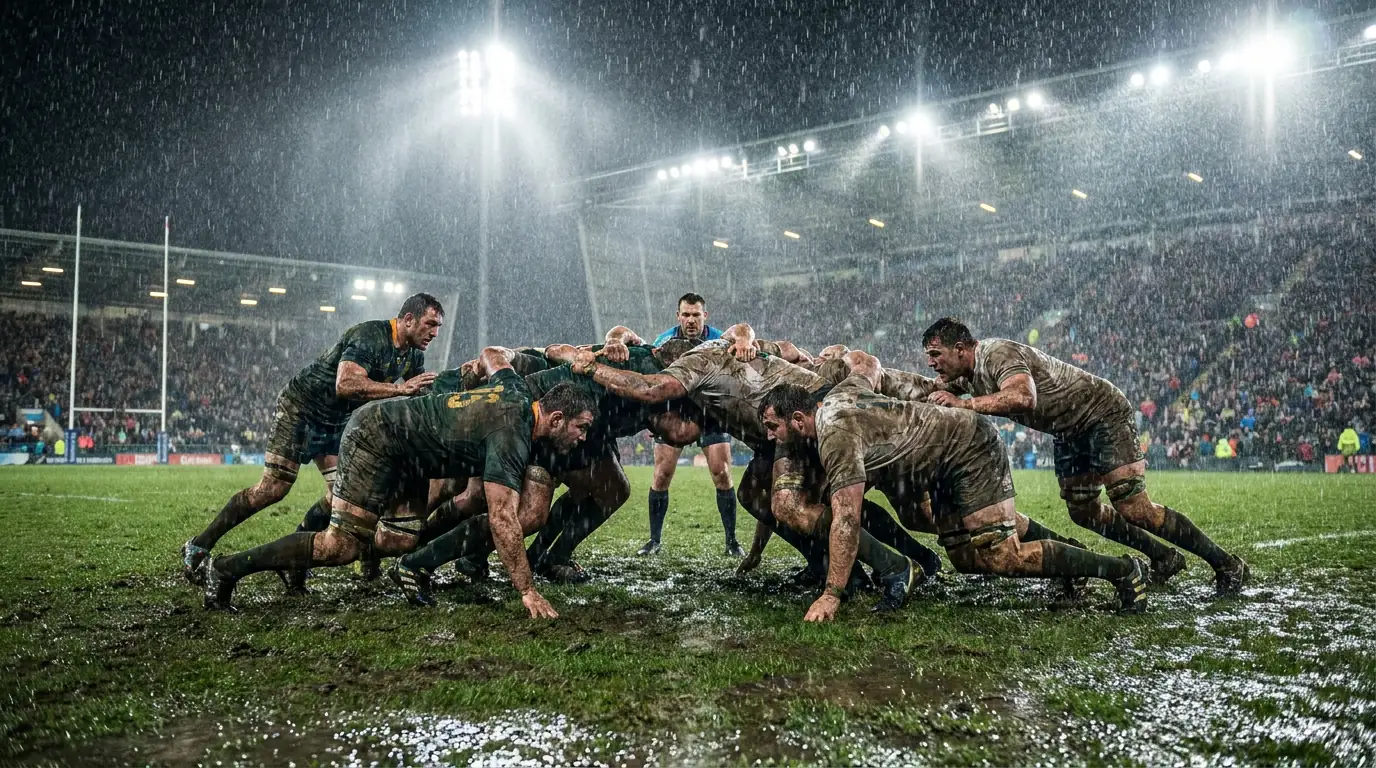
The Six Nations fills stadiums across Europe every spring — more than 1.05 million spectators in 2025 — and every one of those spectators knows what happens when the heavens open at Murrayfield or the wind howls across the Millennium Stadium roof (when it is open). Rugby is an outdoor sport played through the British and Irish winter, and weather is not a nuisance factor; it is a fundamental variable that reshapes how matches are played, how points are scored and, crucially, how betting lines should be priced. In nine years of rugby betting, weather analysis has been my most consistent source of edge precisely because so few bettors take it seriously.
Darren Small, Sportradar’s director of integrity, once noted that the rugby betting market is growing alongside international gambling interest. That growth brings more money into markets but not necessarily more sophistication — and weather is a sophistication gap that patient bettors can exploit week after week.
How Rain Affects Scoring, Handling and Betting Lines
About a third of Premiership matches finish within seven points, and a disproportionate share of those tight, low-scoring contests happen on wet days. Rain affects rugby through three distinct channels, each with betting implications.
The first is handling. A wet ball is harder to pass cleanly, catch under the high ball and secure at the breakdown. Handling errors increase by a measurable margin in wet conditions, which disrupts attacking flow and converts what would be try-scoring opportunities into turnovers. For totals markets, this is the most direct effect: rain suppresses scoring, and under bets gain a structural advantage.
The second is kicking. Goal-kicking accuracy drops in the rain because the ball is heavier and the surface is slippery underfoot. A fly-half who averages 80% from the tee in dry conditions might drop to 65% in heavy rain. That decline in kicking accuracy reduces the conversion rate of tries and the success rate of penalty goal attempts, further compressing the total points scored. But it also affects handicap lines: a team that relies on a dominant kicker to grind out penalty-driven victories is more vulnerable on a wet day than a team that scores primarily through forward power and close-range tries.

The third is tactical approach. Coaches know when rain is coming, and they adjust their game plans accordingly. Expect to see more box-kicking, more territorial play, fewer risky offloads and fewer plays through the hands in the wider channels. The match becomes a contest of forward packs and kicking accuracy, which favours physically dominant teams over those that rely on pace and skill. I factor coaching philosophy into my weather analysis: a coach known for pragmatic, kicking-heavy rugby will lean further into that approach in the rain, while an expansive coach may not adjust enough and pay the price.

Wind: The Overlooked Factor in Kicking-Heavy Matches
Rain gets all the attention, but wind is arguably more impactful per match affected because its effects are less obvious and therefore less priced into the market. Wind disrupts rugby in two main ways: it affects the trajectory of kicks (both from hand and from the tee), and it influences the restart game, where high balls hang in the air and become unpredictable under wind gusts.
In a kicking-heavy Six Nations match, the team kicking with the wind in the first-half gains a measurable territorial advantage. They can find touch deeper, push the opposition back with box kicks that carry further, and attempt penalty goals from greater distances. The team kicking into the wind is compressed into their own half and forced to run the ball out of pressure, increasing the risk of turnovers in dangerous positions.
My wind analysis focuses on first-half/full-time betting. If the wind is strong and one team kicks off into it, I expect that team to trail at half-time and look for value in the Draw/Home or Away/Home HT/FT markets (depending on which team has the wind advantage in the second half). The market rarely adjusts sufficiently for wind direction, because most bettors do not check the forecast in that level of detail.

A Pre-Bet Weather Check Routine for Rugby Weekends
Every Friday evening before a Premiership or Six Nations weekend, I spend twenty minutes on weather. The routine is fixed: I check the hourly forecast for each ground’s specific postcode (not the nearest city), note the expected conditions at kick-off time, and score each match on a three-point scale: dry (no adjustment), marginal (light rain or moderate wind — minor adjustment), or severe (heavy rain, strong wind, or both — major adjustment). That score feeds directly into my totals and handicap assessments.

Timing matters. I check weather on Friday evening for Saturday fixtures and again on Saturday morning for any late changes. For Sunday fixtures, I check Saturday evening. Weather forecasts become more accurate within 24 hours of the event, and I have been caught out by early-week forecasts that changed dramatically by match day. The discipline is to act on the most recent information, not the first information you saw.
Ground-specific conditions add another layer. Grounds near rivers or coasts (Exeter’s Sandy Park, the Principality Stadium in Cardiff, Thomond Park in Limerick) are more susceptible to wind than inland venues. Artificial pitches handle rain better than grass — the surface stays fast and the ball is less affected by moisture — so a wet forecast at a ground with an artificial pitch should produce a smaller totals adjustment than the same forecast at a grass venue.

The return on this twenty-minute investment is substantial. Over the past three seasons, my weather-adjusted totals bets have outperformed my non-weather-adjusted bets by roughly four percentage points on ROI. That gap is entirely attributable to the weather check, and it is available to any bettor willing to spend a few minutes on a forecast before placing their weekend bets. For more on how weather interacts with live betting decisions once a match is underway, the in-play betting guide covers environmental triggers in the context of real-time odds movement.
Which rugby betting markets are most affected by bad weather?
Totals (over/under) are the most directly affected because rain and wind suppress scoring across both teams. Handicap markets are affected when weather favours one team’s style over another — a physically dominant forward pack benefits from wet conditions more than a team reliant on backline speed. Try scorer markets are also affected because try-scoring patterns shift toward forwards in wet weather and toward backs in dry conditions.
Should I wait for the weather forecast before placing a rugby bet?
Yes, particularly for totals and handicap bets. Weather forecasts become significantly more accurate within 24-48 hours of the match. I place my weather-sensitive bets on the day before kick-off once the forecast is reliable. For outright and futures bets, weather is not a factor. For match-day markets, waiting for the final forecast gives you the most accurate information, though you risk missing early prices that may shorten.
