
 Available in US
Content
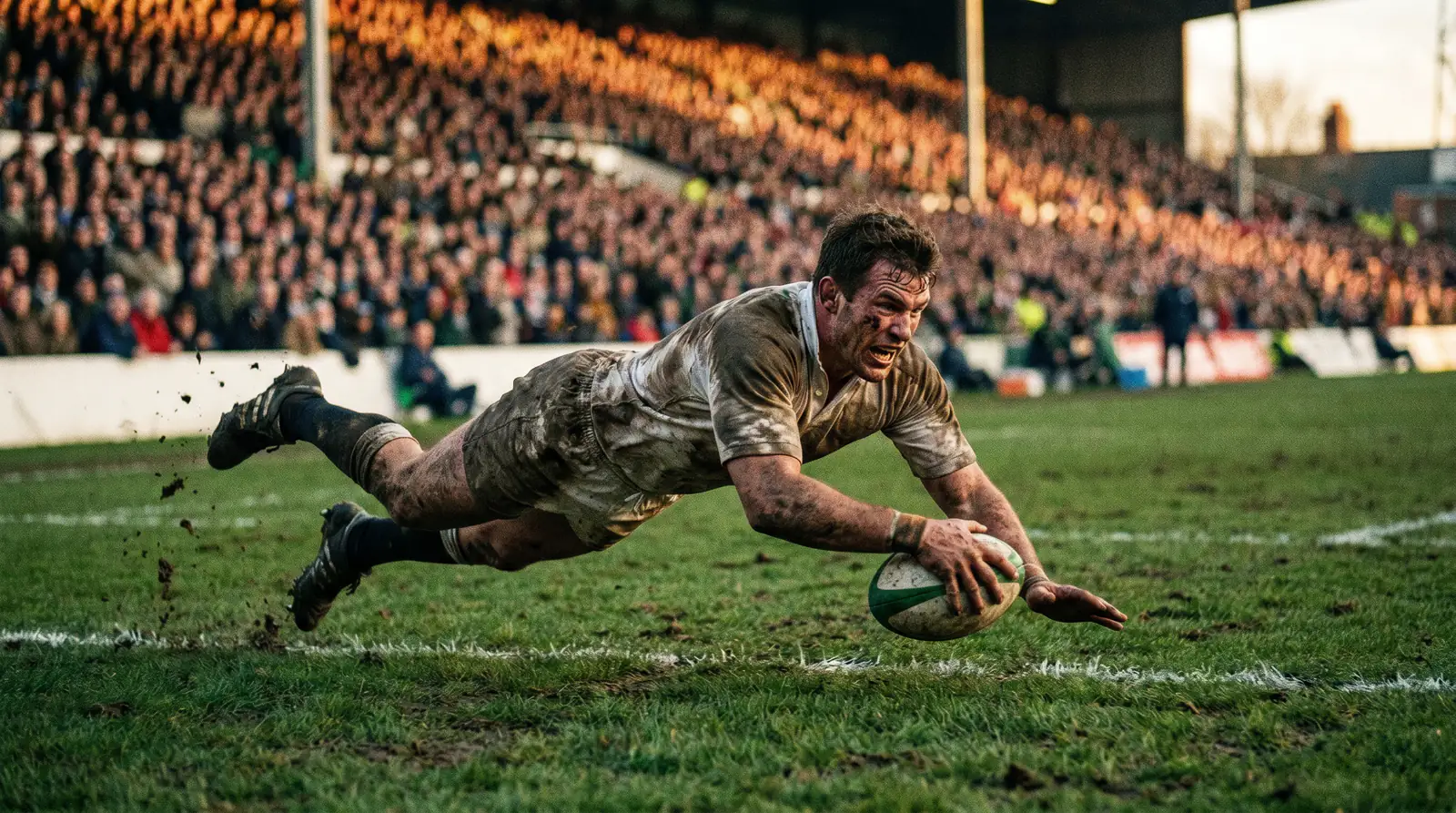
The Six Nations regularly draws more than a million fans through the turnstiles — over 1.05 million attended in 2025 alone, averaging 70,031 per match — and the first try of every game is the moment that lights up a stadium. It is also the moment that settles or sinks thousands of bets placed hours or even days before kick-off. First try scorer is one of the most popular player markets in rugby betting, and one of the most consistently mispriced if you know where to look.
I have been studying try-scoring patterns across Union and League for the better part of a decade. The market fascinates me because it sits at the intersection of statistical analysis and gut feel — you need both. Pure data will point you toward obvious candidates, but the real value hides in understanding how a specific team attacks from phase one, who stands in the wider channels when the set piece delivers quick ball, and which players have the kind of finishing instinct that does not show up in a spreadsheet.
First, Last, Anytime: Three Try Scorer Markets Compared
I once watched a punter in a Twickenham hospitality box celebrate wildly after his first try scorer bet landed in the fourth minute, only to realise he had accidentally backed “last try scorer” instead. He still won — same player scored the final try too — but the confusion between these three markets is more common than you might think.
First try scorer pays out only if your selected player crosses the line for the opening try of the match. The odds are the longest of the three markets because you are predicting not just who scores, but when. A typical winger in a Six Nations match might be priced at 8/1 for first try scorer, 7/2 for anytime, and 10/1 for last try scorer. Those price gaps tell a story about probability and timing.
Anytime try scorer is the most forgiving market. Your player needs to score at least once during 80 minutes, regardless of sequence. It attracts the most volume and therefore tends to have the tightest margins. Bookmakers know the public loves backing familiar names at short prices, so the overround on anytime markets is often higher than on first or last try scorer — which, counterintuitively, means the value sometimes sits in the harder-to-predict first try scorer market where prices are wider and the margin is spread more thinly.
Last try scorer is the wildcard. Late tries often come from bench players injecting pace against tired defences, which means the optimal selection strategy differs from first try scorer. I rarely bet this market unless I have a strong read on a team’s substitution patterns and closing-stage attacking structure.

What Makes a Likely First Try Scorer
Forget the highlight reels for a minute. The first try of a rugby match is not usually a 60-metre breakaway — it is a product of structure. Teams score early tries from set pieces: lineout drives, scrum penalties leading to attacking positions, and first-phase moves off opening kick-off receipts. The player who finishes that try is whoever occupies the designated strike zone in the team’s playbook.
My selection process starts with the team sheet. I look at three things in order: who is playing on the wing on the side where the team’s primary lineout operates, who is the designated finisher from driving mauls, and who plays at inside centre when the team runs a first-phase set play off the 10-12 channel. Those three positions account for the majority of opening tries in professional rugby, yet the market often underprices them because casual bettors gravitate toward star names rather than structural roles.
Form matters, but recent try-scoring form is a noisy signal. A winger who has scored in three consecutive matches might be riding a hot streak, or he might have benefited from weak opposition and favourable scheduling. I care more about “try involvement rate” — how often a player is in the final three phases before a try is scored, whether or not they dot the ball down themselves. A high involvement rate with a low scoring rate suggests regression to the mean: tries are coming, they just have not landed yet.
Opposition defensive shape is the final filter. Some teams defend narrowly, which opens space for outside backs. Others blitz off the line, which creates opportunities for inside runners on switch plays. Watching even ten minutes of a team’s most recent defensive effort tells me more about first try scorer probabilities than a week of reading statistics.

Positional Trends: Wings, Centres and the Blindside Prop Surprise
The 2024 Premiership final at Twickenham drew a record 81,669 spectators, and the first try that day came from a blindside flanker crashing off a lineout drive five metres out. Nobody in the crowd was surprised — forwards score first tries far more often than their odds imply.
Here is what the data shows across the past three Premiership seasons. Wingers score the most tries overall, but they are not the most likely first try scorers. That distinction belongs to players in the 6, 7 and 8 jerseys — back-row forwards who finish driving mauls and pick-and-go sequences. In roughly 28% of Premiership matches, the first try comes from a forward, yet bookmakers routinely price forwards at 12/1 or longer for first try scorer while wingers sit at 6/1 or 7/1.

The pricing gap exists because the public bets with their eyes. Wingers are the glamour position, and their try-scoring volume across the full 80 minutes justifies shorter anytime prices. But first try scorer is a different question — it asks who scores earliest, not who scores most. That distinction is where I find the bulk of my value.
Centres occupy an interesting middle ground. Inside centres (number 12) who play in teams with aggressive first-phase strike plays can be excellent first try scorer bets at 10/1 or longer. Outside centres (number 13) score more often in open play later in matches. I treat them differently depending on the team’s attacking philosophy and whether the match is Union or League. In League, centre tries tend to come from structured sets in the middle of a half rather than from opening plays, so I weight wings and fullbacks more heavily for League first try scorer bets.

The practical takeaway: do not let star power dictate your selections. First try scorer is a market driven by structure, set pieces and early-game tactics. If you can read a team sheet and understand their primary attacking shapes, you already have an edge over the majority of bettors who simply pick the most recognisable name on the teamsheet. For a deeper look at combining try scorer picks with other legs, my rugby bet builder guide walks through correlation and pricing.
Timing Your Selection and Managing Expectations
I place first try scorer bets after the team sheets are confirmed and before the final rush of money on match day. That window — usually 24 to 48 hours before kick-off — gives me confirmed selections without the late market compression that comes when everyone piles on the same popular names.

One honest word on expectations: first try scorer is a high-variance market. Even the best-informed selections will lose more often than they win. Over a Six Nations tournament of 15 matches, I target three to five winning selections, which at average odds of 8/1 to 12/1 delivers a healthy return if my staking is disciplined. The key is resisting the urge to chase losses by adding more selections per match. One bet per game, the best-value candidate I can find — that discipline matters more than any analytical edge.
Is anytime try scorer a better value bet than first try scorer?
Not necessarily. Anytime try scorer has higher hit rates but shorter odds and wider bookmaker margins. First try scorer offers longer prices with thinner margins, meaning the expected value per bet can actually be higher if your selection process is sharp. The right choice depends on your tolerance for variance: anytime suits steady grinders, first try scorer suits bettors comfortable with longer losing runs punctuated by bigger wins.
How do I assess a forward’s try-scoring chances near the line?
Look at three factors: the team’s lineout maul success rate, whether the forward plays on the same side as the primary lineout jumper, and how often the team uses pick-and-go sequences inside the five-metre line. Back-row forwards in teams with dominant mauls — particularly number eights who detach from the base — are statistically the most likely forwards to score first tries. Check recent match footage rather than relying on season-long stats, because maul tactics evolve week to week.
