
 Available in US
Content
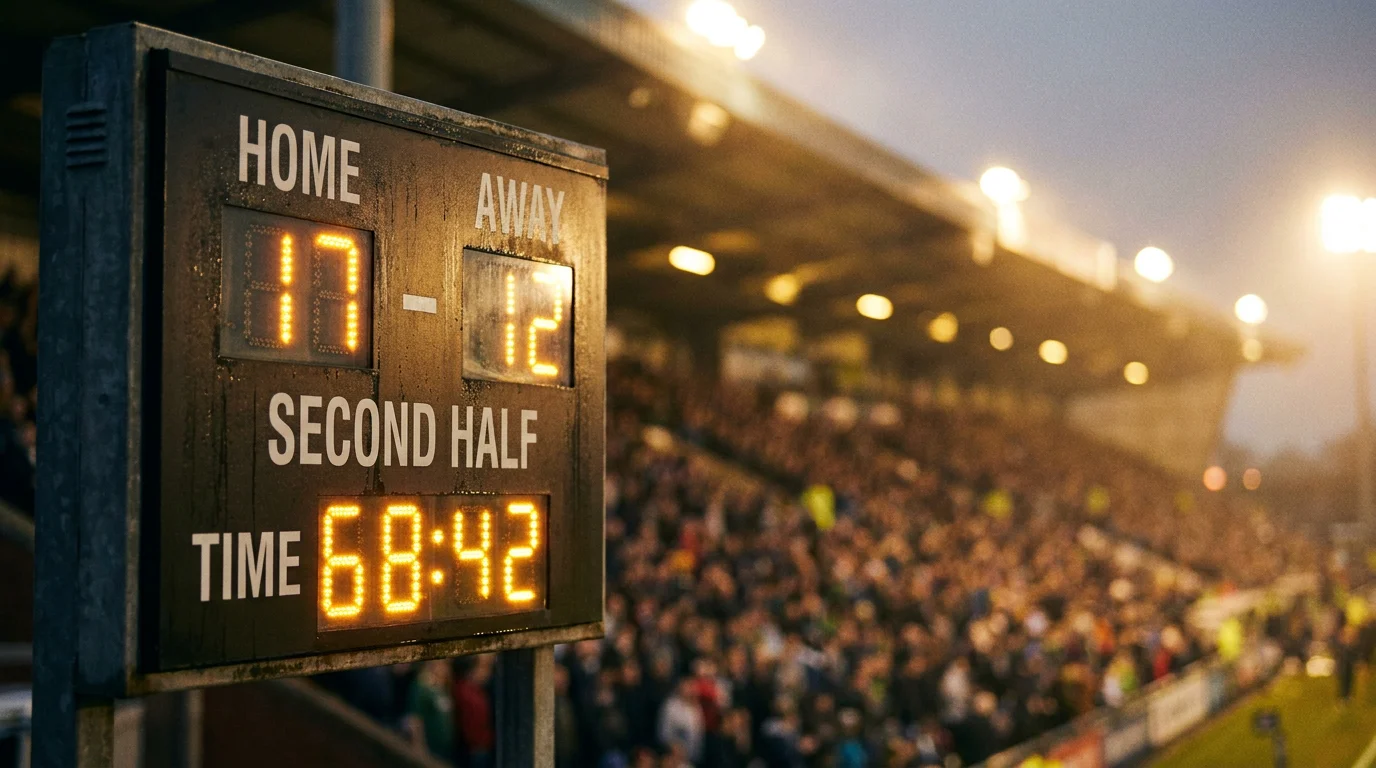
Roughly a third of Premiership Rugby matches finish with a winning margin of just one to seven points — tight, tense affairs where a single penalty kick reshapes the entire scoreline. That narrow band of outcomes is precisely what makes totals markets so interesting, and so misunderstood. Most bettors I talk to treat the over/under as a coin flip: pick a side, hope for the best. In nine years of breaking down rugby numbers, I have found the opposite — totals reward patience, homework and a willingness to look beyond the headline form.
The points market sits alongside match result and handicap as one of the three pillars of rugby betting, yet it attracts less analytical attention than either. That gap is your opportunity. Whether you are backing overs on a fast Super League Friday or hunting unders on a rain-soaked Premiership Saturday, the principles are the same: understand how lines are built, know where Union and League diverge, and pay attention to the situational details bookmakers price in too slowly.
How Over/Under Lines Work in Rugby
I remember the first time a totals line genuinely confused me. A Premiership match was set at 44.5 points and I could not figure out why — both sides averaged well above 25 points per game. It turned out the bookmaker had baked in a forecast for heavy rain at the Stoop. That was the moment I realised totals lines are not just averages; they are opinions about a specific 80 minutes.

The mechanic itself is simple. A bookmaker sets a line — say 42.5 total match points — and you bet on whether the combined score of both teams will finish over or under that number. The half-point ensures there is no push: one side always wins. Odds on either side typically sit close to evens, though you will see them drift to 4/5 or 5/6 depending on where the money flows.
What matters is the number behind the number. Bookmakers build totals from a blend of inputs: each team’s average points scored and conceded over recent matches, head-to-head history at that venue, expected weather, and known team selection changes. Injuries to a goal-kicking fly-half, for instance, can shave two to four points off a projected total because missed conversions and penalty attempts add up fast. I always check the named squad announcements 48 hours before kick-off — if a reliable kicker drops out, the line often does not adjust until the casual money arrives on match day, leaving a window for sharper bettors.
One subtlety newcomers miss: bookmakers set totals lines partly to balance their book, not purely to predict reality. When public money floods the over side (which it does — people enjoy high-scoring games), the line nudges upward, sometimes past fair value. That upward creep is where under bets find their edge.
Points Ranges: Union Totals vs League Totals
Last season I ran the numbers on every Super League round and every Premiership round side by side. The difference is stark. Super League matches averaged north of 44 combined points; Premiership matches hovered closer to 40, and that gap widens when you strip out bonus-point chasing in the final quarter. League is simply a faster, more open game, and the totals lines reflect it.
Why does this matter for your bets? Because “over 40.5” means something very different in each code. In a League match with typical scoring, 40 total points is below average — you are essentially backing a slightly slower-than-usual contest. In Union, 40 total points is right around the median, so you are taking a genuine 50-50 shot unless you have an edge on conditions or personnel.
The Super League attendance record in 2025 — more than 1.62 million fans across the regular season, with television audiences up 52% — tells you something about the product on the field. Higher crowds and bigger TV deals incentivise attacking rugby; coaches know entertainment sells. That cultural pressure nudges League scoring higher and, crucially, makes League totals lines more predictable. Union, with its set-piece complexity and territorial kicking games, produces more variance. A Premiership match can swing from a 50-point thriller to a 16-12 grind depending on which coaching philosophy shows up that week.

My rule of thumb: when I am less certain about conditions or form, I lean towards unders in Union and overs in League. The base rates favour those positions, and when I layer in situational factors, I am starting from a stronger foundation.
Situational Factors That Push Totals Up or Down
A Tuesday evening in Salford changed how I think about totals. I had backed over 42.5 in a Super League midweek fixture, assuming the usual high-scoring affair. What I had not accounted for was that both squads were in a short turnaround from the previous Sunday, key playmakers were rested, and the temperature had dropped to near freezing. Final score: 12-10. Lesson learned — context overrides averages every time.
Here are the situational factors I weigh most heavily, ranked by impact:
Weather is the heavyweight. Rain and wind suppress scoring in both codes, but the effect is amplified in Union where the kicking game carries more tactical weight. A wet ball means dropped passes, missed touch-finders and penalty goals replacing try-scoring opportunities. I check the hourly forecast for the ground’s postcode, not just the city. Microclimates around stadiums near rivers or coasts (think Exeter, Bath, Swansea) can differ from the regional report.

Squad rotation comes next. International windows strip Premiership rosters of frontline players, and the replacements — talented as they are — lack cohesion. Combined scores during Six Nations weekends consistently dip below season averages. The same applies to Challenge Cup weekends in League, where coaches sometimes rest their spine players for the following Super League fixture.
Venue history is underrated. Some grounds produce consistently higher totals thanks to pitch dimensions, surface quality or altitude (Clermont’s Marcel-Michelin, if you follow European competition, is the classic example). In domestic rugby, artificial pitches at grounds like Saracens’ StoneX tend to be faster and drier, which nudges totals upward. I keep a simple spreadsheet tracking average combined scores at each venue over the past two seasons — it takes ten minutes to update each week and saves me from lazy assumptions.

Finally, motivation asymmetry. A team fighting relegation against a team with nothing to play for sounds like a recipe for caution, but it often produces chaotic, high-error rugby. Desperate teams press higher, force turnovers and either score quickly or concede quickly. When I spot a relegation six-pointer, I lean over unless the weather intervenes.
Combining these factors is where the real craft sits. No single variable should override the others. I score each factor on a simple plus/minus scale — does it push the total up, down, or leave it neutral? — and only bet when three or more factors align in the same direction. That discipline has kept my totals strike rate above 55% over the past four seasons, which, in a market priced near evens, is more than enough to grind a profit.

If you want to pair totals insights with handicap analysis, I have written a deeper breakdown in my rugby handicap betting guide that covers how spreads interact with totals in the same match.
Your Pre-Bet Totals Routine
Before every totals bet I place, I run through five checks in the same order. First, the line itself — where did it open, where is it now, and which direction has it moved? A line that opened at 41.5 and has climbed to 43.5 tells me the public is on overs, which makes unders more attractive if my analysis supports it. Second, the weather at kick-off time, not the day before. Third, confirmed team sheets — not rumoured, confirmed. Fourth, venue history for the past two seasons. Fifth, the code-specific base rate: am I betting Union or League, and have I adjusted my expectations accordingly?

That five-step routine takes about fifteen minutes per match. It is not glamorous work, but it is the kind of homework that separates bettors who survive a season from those who burn through their bankroll by round six. Totals are a market where preparation compounds — the more data you log, the sharper your instincts become, and the faster you spot lines that do not match reality.
What is the typical over/under line for a Premiership rugby match?
Premiership totals lines generally sit between 38.5 and 46.5, with 42.5 being the most common setting. The exact number depends on the two teams involved, venue, weather and whether key kickers are available. During international windows, lines tend to drop by two to four points because frontline players are away on Test duty.
Does rain lower rugby totals enough to change my bet?
Yes. Heavy rain consistently suppresses scoring in both codes by increasing handling errors and reducing the accuracy of place-kicking. In Union, wet conditions push teams toward territorial kicking rather than phase play, which compresses scoring. If rain is forecast at kick-off and the line has not moved down, an unders bet often carries value.
Are first-half totals a safer option than full-match totals?
First-half totals reduce your exposure time but carry narrower margins and higher variance. Teams often start cautiously and score more freely after half-time, so first-half unders hit more frequently than full-match unders. However, the odds reflect this — bookmakers price first-half lines tighter, so the value gap is smaller. I treat first-half totals as a complement to full-match bets, not a replacement.
